Dancers are allowed, indeed encouraged, to remain children forever.
I’m much stronger than most women. Consequently, when I work with men, or when I’m partnered by men... We can actually go into kinds of movement that haven’t been available before, simply because I’ve strengthened myself as a woman, not because I’ve weakened him.
Creativity requires quite a lot of faith - not just in yourself but also in the knowledge that you have the right to proceed, even when you may not know exactly what you're doing.
Skill is how you close the gap between what you can see in your mind's eye and what you can produce; the more skill you have, the more sophisticated and accomplished your ideas can be. With absolute skill comes absolute confidence.
Our ability to grow is directly proportional to an ability to entertain the uncomfortable.
You're only kidding yourself if you put creativity before craft.
Failing, and learning from it, is necessary. Unil you've done it, you're missing an important piece of your creative arsenal.
Dance is the stepchild of the arts.
The notion of the hero as outsider, as alien, is forget it, over, done with. It's not about being against society anymore. It's about standing there, holding something up. It's not pulling away.
We get into ruts when we run with the first idea that pops into our head, not the last one.
Destiny, quite often, is a determined parent. Mozart was hardly some naive prodigy who sat down at the keyboard and, with God whispering in his ears, let music flow from his fingertips. It's a nice image for selling tickets to movies, but whether or not God has kissed your brow, you still have to work. Without learning and preparation, you won't know how to harness the power of that kiss.
In dreams, anything can be anything, and everybody can do. We can fly, we can turn upside down, we can transform into anything.
I work because I have issues and questions and feelings and thoughts that I want to have a look at. I'm not in need of, or wanting, particularly, to know what other folk are up to.
Creativity is a habit, and the best creativity is a result of good work habits. That's it in a nutshell ... In order to be creative you have to know how to prepare to be creative.
Every work of art needs a spine – an underlying theme, a motive for coming into existence. It doesn't have to be apparent to the audience. But you need it at the start of the creative process to guide you and keep you going.
One clear difference between art and commercial work is that commercial work is exploitive: the work may be high quality but the intention is to sell product or tickets. Art exists with or without ticket sales.
It is extremely arrogant and very foolish to think that you can ever outwit your audience.
The thing about creativity is, people are going to laugh at it. Get over it.
Whom the gods wish to destroy, they give unlimited resources.
I often say that in making dances I can make a world where I think things are done morally, done democratically, done honestly.
Obligation is a flimsy base for creativity, way down the list behind passion, courage, instinct, and the desire to do something great.
Optimism with some experience behind it is much more energizing than plain old experience with a certain degree of cynicism.
I do everything I know how in a dance.
Creativity is a habit, and the best creativity is a result of good work habits.
If art is the bridge between what you see in your mind and what the world sees, then skill is how you build that bridge.
While most people in the arts think they have to be constantly looking forward to be edgy and creative....the real secret of creativity is to go back and remember.
I learned very early that an audience would relax and look at things differently if they felt they could laugh with you from time to time. There's an energy that comes through the release of tension that is laughter.
Without passion, all the skill in the world won't lift you above craft.
You may wonder which came first: the skill or the hard work. But that's a moot point. The Zen master cleans his own studio. So should you.
Without passion, all the skill in the world won't lift you above craft. Without skill, all the passion in the world will leave you eager but floundering. Combining the two is the essence of the creative life.
Dance has never been a particularly easy life, and everybody knows that.
Traveling the paths of greatness, even in someone else's footprints, is a vital means to acquiring skill.
Life is about moving, it’s about change. And when things stop doing that they’re dead.
Confidence is a trait that has to be earned honestly and refreshed constantly; you have to work as hard to protect your skills as you did to develop them. . . The one thing that creative souls around the world have in common is that they all have to practice to maintain their skills. Art is a vast democracy of habit.
A lot of people insisted on a wall between modern dance and ballet, that the two disciplines were totally separate, and if you did one, you couldn’t do the other. I’m beginning to think that walls are very unhealthy things.
Everyone has a talent. It's simply a question of good discipline, of the good fortune to have an education that meshes with that talent, and a lot of luck.
In the end, there is no ideal condition for creativity. What works for one person is useless for another. The only criterion is this: Make it easy on yourself. Find a working environment where the prospect of wrestling with your muse doesn't scare you, doesn't shut you down. It should make you want to be there, and once you find it, stick with it. To get the creative habit, you need a working environment that's habit-forming. All preferred working states, no matter how eccentric, have one thing in common: When you enter into them, they compel you to get started.
I always find that the best collaborations are when you work with people that know what they're doing, and you leave them alone to do it.
I have to feel that each thing I've learned I can push to another point next time. I'm not very good with repetition. I would rather not work than feel that repetition is the order of the day.
We're a machine and we have to be worked in the same way we have to be fed.
You don't get into the mood to create – it's discipline.
More often than not I've found, a rut is a consequence of sticking to tried and tested methods that don't take into account how you or the world has changed.
The last two - distractions and fears - are the dangerous ones. They're the habitual demons that invade the launch of any project. No one starts a creative endeavor without a certain amount of fear; the key is to learn how to keep free-floating fears from paralyzing you before you've begun. When I feel that sense of dread, I try to make it as specific as possible.
The only thing I fear more than change is no change. The business of being static makes me nuts.
If you only do what you know and do it very, very well, chances are that you won't fail. You'll just stagnate, and your work will get less and less interesting, and that's failure by erosion
As people who have commitments and obligations, we try to blockade emotions and go on our course towards excellence, and that's a lie. I've definitely paid a price. Everything is an exchange.
Reading, conversation, environment, culture, heroes, mentors, nature – all are lottery tickets for creativity. Scratch away at them and you’ll find out how big a prize you’ve won.
Everything is raw material. Everything is relevant. Everything is usable. Everything feeds into my creativity. But without proper preparation, I cannot see it, retain it, and use it.
The content and thematic materials of dance is, of itself, like boxing. You play tennis and baseball. But boxing is not a sport you play: you stand up and do it.
A commission is an invitation to fall in love.
Art is the only way to run away without leaving home.
There are as many forms of memory as there are ways of perceiving, and every one of them is worth mining for inspiration.
To make real change, you have to be well anchored - not only in the belief that it can be done, but also in some pretty real ways about who you are and what you can do.
Concentrate: you can't have it all.
When you stimulate your body, your brain comes alive in ways you can't simulate in a sedentary position.
But obligation, I eventually saw, is not the same as commitment, and it's certainly not an acceptable reason to stick with something that isn't working
You don't have a really good idea until you combine two little ideas.
dance is simply the refinement of human movement - walking, running, and jumping. We are all experts. There should be no art form more accessible than dance, yet no art is more mystifying in the public imagination.
Whether it's a painter finding his way each morning to the easel, or a medical researcher returning daily to the laboratory, the routine is as much a part of the creative process as the lightning bolt of inspiration, maybe more.
When creativity has become your habit; when you've learned to manage time, resources, expectations, and the demands of others; when you understand the value and place of validation, continuity, and purity of purpose, then you're on the way to an artist's ultimate goal; the achievement of mastery.
To embrace luck, you have to enhance your tolerance for ambiguity.
I'm not one who divides music, dance or art into various categories. Either something works, or it doesn't.
Later in life, one of the compensations is gliding effortlessly into focus in a thing. Since it is who we are, anything that is not the focus or supportive thereof is just not us. Even outside issues, when they arise, are interesting in that they only help define the focus more clearly.
It's vital to establish some rituals-automatic but decisive patterns of behavior-at the beginning of the creative process, when you are most at peril of turning back, chickening out, giving up, or going the wrong way.
The irony of multitasking is that it's exhausting: when you're doing two or three things simultaneously, you use more energy than the sum of energy required to do each task independently. You're also cheating yourself because your're not doing anything excellently. You're compromising your virtuosity. In the words of T. S. Elliot, you're 'distracted from distractions by distractions'.
Without the little ideas, there are no big ideas.
I don't think politicians should be allowed into power who are not familiar with their bodies, because that's where our bottom line is. And I know that they would make totally different decisions if they felt responsible simply for their own bodies.
I'm often asked, 'Where do you get your ideas?' ...It's like asking, 'Where do you find air to breathe?' Ideas are all around you.
You can keep on chewing gum for ten hours, but after about a minute and a half you've got all the good out of it.
Usually kids who are talented have the brashness to think they can do anything, but they don't often get the chance to see how close they can come.
Art is an investigation.
The art of these Fifties movies was in sustaining forever the moment before sex.
Perfect practice makes perfect.
Living had little use for me other than how it could be funneled into dance.
When you're in a rut, you have to question everything except your ability to get out of it.
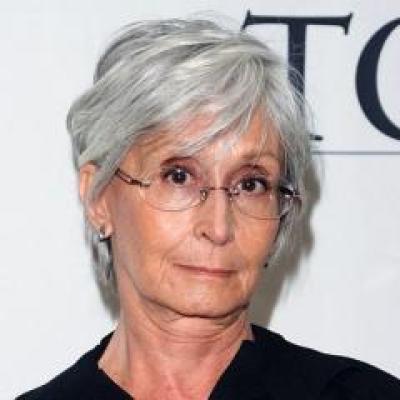
I've always thought my creative life began the moment my mother called me Twyla.
I read for growth, firmly believing that what you are today and what you will be in five years depends on two things: the people you meet and the books you read.
When you're in a groove, you're not spinning your wheels; you're moving forward in a straight and narrow path without pauses or hitches. You're unwavering, undeviating, and unparalleled in your purpose. A groove is the best place in the world. Because when you are in it, you have the freedom to explore, where everything you question leads you to new avenues and new routes.
When I'm in the studio, when I'm warm, when I'm what people call improvising, I feel a very special connection. I feel the most right. I don't want to become too mystic about this, but things feel as though they're in the best order at that particular moment.
I had received my first establishment grants in response to applications filed the year before. To the pages of baffling forms I had simply attached a handwritten note saying, 'I make dances, not applications. Send the money. Love, Twyla.
Metaphor is the lifeblood of all art.
Whether or not God has kissed your brow, you still have to work. Without learning and preparation, you won't know how to harness the power of that kiss.
I've always found it necessity to strip away everything but the most fundamental ways to work - the rest is style.
Creativity is more about taking the facts, fictions, and feelings we store away and finding new ways to connect them. What we're talking about here is metaphor. Metaphor is the lifeblood of all art, if it is not art itself. Metaphor is our vocabulary for connecting what we are experiencing now with what we have experienced before. It's not only how we express what we remember , it's how we interpret it - for ourselves and others.
Don’t sign on for more problems than you must. Resist the temptation to involve yourself in other people’s zones of expertise and responsibility. Monitor troublesome situations if you need to, but don’t insert yourself unless you’re running out of time and a solution is nowhere in sight. In short, stifle your inner control freak.
I cannot overstate how much a generous spirit contributes to good luck. Look at the luckiest people around you, the ones you envy, the ones who seem to have destiny falling habitually into their laps. If they're anything like the fortunate people I know, they're prepared, they're always working at their craft, they're alert, they involve their friends in their work, and they tend to make others feel lucky to be around them.
By making the start of the sequence automatic, they replace doubt and fear with comfort and routine.
I repeat the wake-up, the workout, the quick shower, the breakfast of three hard-boiled egg whites and a cup of coffee, the hour to make my morning calls and deal with correspondence, the two hours of stretching and working out ideas by myself in the studio ... That's my day, every day. A dancer's life is all about repetition.
I would have to challenge the term, modern dance. I don't really use that term in relation to my work. I simply think of it as dancing. I think of it as moving.
Solitude is an unavoidable part of creativity. Self-reliance is a happy by-product.
There's a paradox in the notion that creativity should be a habit. We think of creativity as a way of keeping everything fresh and new, while habit implies routine and repetition. That paradox intrigues me because it occupies the place where creativity and skill rub up against each other.
After so many years, I've learned that being creative is a full-time job with its own daily patterns. That's why writers, for example, like to establish routines for themselves. The most productive ones get started early in the morning, when the world is quiet, the phones aren't ringing, and their minds are rested, alert, and not yet polluted by other people's words.
The routine is as much a part of the creative process as the lightening bold of inspiration, maybe more. And this routine is available to everyone.
I think that probably the moments of discovery do come from a place that is not totally organized. Order is something that we already know about. Discoveries are in a place we don't already know about.
I think that anyone who's pushed to do the very best that they can is privileged. It's a luxury.
I had always seen myself as a star; I wanted to be a galaxy.
I think people want very much to simplify their lives enough so that they can control the things that make it possible to sleep at night.
when the time came I would do battle with my mother for the right to sit at the center of my own life.
Before you can think out of the box, you have to start with a box
Mastery is an elusive concept. You never know when you achieve it absolutely and it may not help you to feel you've attained it. We can recognize it more readily in others than we can in ourselves. We have to discover our own definition of it.
Dancing is like bank robbery, it takes split-second timing.
It takes skill to bring something you've imagined into the world: to use words to create believable lives, to select the colors and textures of paint to represent a haystack at sunset, to combine ingredients to make a flavorful dish. No one is born with that skill. It is developed through exercise, through repitition, through a blend of learning and reflection that's both painstaking and rewarding. And it takes time. . . . If art is the bridge between what you see in your mind and what the world sees, then skill is how you build that bridge.
Whenever I feel I'm working in a groove it's invariably because I feel I am being the benefactor in the situation rather than the beneficiary. I am sharing my art with others, lending my craft to theirs, interest-free with no IOU.
Creativity is an act of defiance.
In order to be creative, you have to know how to prepare to be creative.....A lot of habitually creative people have preparation rituals linked to the setting in which they choose to start their day. By putting themselves into that environment, they begin their creative day.
I also had a will that let me eliminate everything that stood in the way of my becoming the best dancer I could be. By a gradual process... (I) had invested every bit of my dreams, my hopes, my energies in defining myself as a dancer.
You only need one good reason to commit to an idea, not four hundred. But if you have four hundred reasons to say yes and one reason to say no, the answer is probably no.
The more you know, the better you can imagine.
Ultimately there is no such thing as failure. There are lessons learned in different ways.
You have to believe there's something at the other side. And you have to have faith in yourself. You have to think that you have the tools to accomplish it.
Judgment is not my business. Existing is my business.
Doing is better than not doing, and if you do something badly you'll learn to do it better.
The more you fail in private, the less you will fail in public.
If you're speaking of love, you really must include the element of uncertainty - and perhaps it's best approached as the art of constant maintenance.
What I do remember is visualization of the sound of music, seeing bodies in movement in relation to how music sounded, because my mother practiced at the keyboard a lot and I also went to her lessons. As a two year old, three year old I remember seeing things in movement.
When it all comes together, a creative life has the nourishing power we normally associate with food, love and faith.
No one is born with skill. It is developed through exercise, through repetition, through a blend of learning and reflection that's both painstaking and rewarding. And it takes time.
The first steps of a creative act are like groping in the dark: random and chaotic, feverish and fearful, a lot of busy-ness with no apparent or definable end in sight.
Generosity is luck going in the opposite direction, away from you. If you're generous to someone, if you do something to help him out, you are in effect making him lucky. This is important. It's like inviting yourself into a community of good fortune.
I have always felt one of the things dance should do - its business being so clearly physical - is challenge the culture's gender stereotypes.
Creativity is not just for artists. It's for businesspeople looking for a new way to close a sale; it's for engineers trying to solve a problem; it's for parents who want their children to see the world in more than one way.
I have the wherewithal to challenge myself for my entire life. That's a great gift.
Energy and time are finite resources; conserving them is very important.
Once you accept the power of spine in the creative act, you will become much more efficient in your creativity. You will still get lost on occasion, but having a spine will anchor you.
I have learned over the years that you should never save for two meetings what you can accomplish in one.