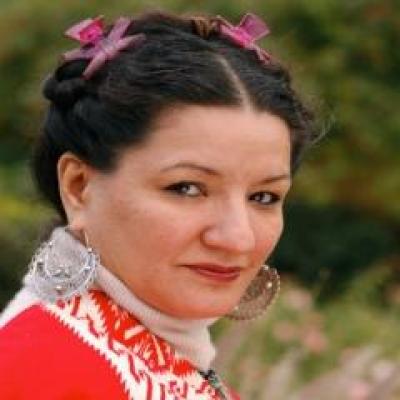
Perhaps the greatest challenge has been trying to keep my time to myself and my private life private in order to do my job. Everything that is most mine belongs to everyone now.
You know that you wouldn't take a baby on a plane without diapers, so when you leave your house, take care of you, like you would a baby. Don't leave your house without packing some healthy things.
Heartbreak makes us stronger; it's an opportunity for spiritual growth. How can you understand someone else's pain if you have not yourself suffered?
The older I get, the more I'm conscious of ways very small things can make a change in the world. Tiny little things, but the world is made up of tiny matters, isn't it?
You know, if you've got nine people that you've got to get a treat for - because you do have sweet food, even if you're poor - you can't go out and buy a Sara Lee cake. You buy the big bag of cookies, those chocolate and vanilla ones with the icing. That has a lot of trans fat in it, but it goes a long way with a lot of people.
I think there's some great stuff coming. I do feel that. I think we have reached our Harlem Renaissance.
There are still many writers out in the Bay, extraordinary writers like Gina Valdez, a poet who I just saw in Portland. We have young people like Eduardo Corral, who won the Yale Younger Poets Award. José Antonio Rodriguez, published by Luis Rodriguez. But there are only a few of us who are paid attention to in New York. There are legions behind us who are not.
Like all guests, after a fortnight, grief is best beyond the door.
I think that you need to have books that talk about the lives of the poor, and they need to be involved - involved in acquisitions.
I know the books that I need to help me to be wiser than my years and be kinder and more compassionate and more patient than I really am.
People want you to be the ambassador of everything. This happens to me especially when I go to Europe. I have to be the ambassador of everything. I learned this from Elena Poniatowska - intelligent woman, great lady, one of my heroes, one of my spiritual mentors, I love her. Someone is in this big museum and they ask her, "Elenita, what do you think about Mexican women . . ." And she says, "I haven't a clue!"
I'm most tired after I read, after I've just done a performance, but what I try to do is to fuel and eat a really healthy meal before I perform. I want to have enough energy to talk to that last person.
As Indigenous peoples, we know there is more to the world. We know spirits exist. We know as women, because we're especially attuned to this kind of knowledge, that spirits exist and have a presence in our lives. Some of us are gifted and can communicate with the spirit world. Not everyone has that gift and can perceive the borders between the living and the dead and our society actively discourages us of exploring the knowledge of what many of us have already always known in our cultures.
But I deal with this by meditating and by understanding I've been put on the planet to serve humanity. I have to remind myself to live simply and not overindulge, which is a constant battle in a material world.
We changed it to emocionó, the way you say in Spanish, "to emotion me" [to be moved]. That, as opposed to "haunt." We wanted the feeling of sadness and grief and obsession, so we used emocionó.
When I was at home, I wasn't shy. I was the clown at home, because I was loved. It was in the outside world that I was judged and I wasn't loved. That was very clear to me, that I wasn't loved. So I became very quiet. You know, those little girls you see in those pictures that look like they want to hunch, I was trying to disappear into my shoulder blades. The quietest person in the classroom, that was me. But that wasn't me at home.
As an artist, I have to be the ambassador of everything.
I like to think about the bestseller list as, "This is the medicine cabinet of a very sick country." Let me look and see what they're reading that isn't nourishing them.
Revenge only engenders violence, not clarity and true peace. I think liberation must come from within.
The border between the dead and the living, if you're Mexican, doesn't exist. The dead are part of your life.
I learned from the Macarturos. I had never been at a table with a labor organizer and a playwright and a performance artist and an anthropologist and a human rights lawyer. Usually at most gatherings, it's all writers. But suddenly I was at a table with all these different people and I learned from each of them, learned from the work they're doing, learned new ways to solve my problems.
She became politically conscious thanks to Studs Terkel and the radio. She started reading all the books we brought home from college and was a great fan of Noam Chomsky. She was a real lefty and yet was not able to meet her dream of becoming an artist. She got drafted into motherhood big time - seven kids - and that wasn't the life that she had planned. So she opened the path so that I could be the artist that she wanted to be.
Books are medicine and you have to take the right medicine that you need at that moment or that day or that time in your life.
Once you can open yourself to joy, you feel as if you've transformed your sadness into illumination, which is really all that art is. All we want to do is transform the negative emotions into light. We want to compost them into light.
Every book changes my writing because I'm always trying to do something I didn't do before. I try to do what's hard for me, what I haven't done in the past.
I can get by and chatter and talk and tell funny stories, make people laugh, but I don't have as many words, I don't have the vocabulary. I think if I forced myself to read in Spanish - you know, I always say I'm going to, but I lose my patience reading in Spanish, because I really do read the way a third grader does, mouthing the words. That takes a long time!
I can't hang around with lots of people these days because I am hypersensitive. So when I am around a lot of people or a big roomful of people I get almost autistic. I get overwhelmed and really tired. So I don't like being around large groups.
The older you get, the more power you have with language as a writer, which means that you have to be extra responsible for what you say, whether it's in print or in front of a microphone, because those words can go out and kill or go out and plant seeds for peace.
Get yourself empty in the Eastern sense. Not in the Western sense. In the Western sense when we feel empty we feel lonely, miserable, but in the Eastern sense - "I'm so empty, because I'm filled with everything, and I'm connected to everything." It's very energizing. You want that kind of emptiness, whatever you have to do to get yourself quiet.
I am obsessed with becoming a woman comfortable in her skin.
What you're going to be asked to do is bigger than what you think you can do. It's always bigger than what you think you can handle, but you're never going to be given something you can't handle.
[Courage] always bigger than what you think you can handle, but you're never going to be given something you can't handle. So you say, "Okay, when you tell me what it is that I'm supposed to do, please give me the courage to do it."
If you're poor, potato chips are the food of life for you. It's the caviar.
People know when you're speaking from el corazón. You have that pain. Take that pain and do something with it. That's very powerful.
If you're going to write about the river, you've got to get in.
You were given that pain and that vision because you have something to do with it.
I think one of the great primordial fears we have once we become conscious of our aloneness as children is the fear of losing our mother. We have that from the moment we realize we can lose her just in the supermarket. As a child, it was more terrifying than arithmetic.
For example, there's no word emocionó in English, so I have to say, "You, you really emotioned me," It's more precise, even though it sounds odd. "My father emotioned me." Or "That performance really emotioned to me."
I want to thank you, especially those people who are agnostic or atheist. I don't mean any offense by the things I said of the spirit world. Thank you for allowing me to speak about the spiritual, because I can't talk about my life or writing without mentioning that.
Spanish is a poetic language, in particular the Spanish of Mexico which has a wonderful animistic attitude you might not see in the Spanish of the peninsula. I think it has to do with the indigenous way of looking at nature.
You can't erase what you know. You can't forget who you are.
Imagine Americans who go to Paris. Why would you want to go where someone's going to disparage you? Why would you go anywhere where they treat you bad? Well, that's how it is for us to go to Mexico. You have to be on your guard, because I think the Mexicans are harder on the Mexicans, the Mexican-Americans. They don't see us as Mexican. I think part of it's a class issue and a color issue. We're more connected to their servants, so what are we doing staying at a nice hotel? There's a kind of shame.
Don't be afraid to say what you don't know, and speak for what you do know. Say, "I can't speak for all Latinas, but I can speak for me and tell you very, very honestly."
Even my mom. I have to tell her, "If you want a snack, don't go to bed with potato chips. Eat a handful of pistachios and a handful of dates."
I think diseases have no eyes. They pick with a dizzy finger anyone, just anyone.
[Writing is like fishing]. You don't bow because you made the fish. That's the difference. If you know that, then you bow for your labor.You crafted, you worked, you put in those hours so that you could catch that fish. But you didn't make that fish. You just caught the fish. That will help you stay humble and bow for the right reason and be very lucid about the work you do.
I began writing as an experimental writer.
I feel like I am in a box of bees when I am in a room with lots of people and I'm just looking for the door. I find myself getting more and more agoraphobic as time goes on.
The beauty of literature is you allow readers to see things through other peoples eyes. All good books do this.
I also learned to tell a story. I think I learned from poetry how to time a story. Poetry's timing, beats and pauses. That white space on the page is as important as the black. The bottom of the page is blackout. It's performance.
My Virgen de Guadalupe is not the mother of God. She is God. She is a face for a god without a face, an indigena for a god without ethnicity, a female deity for a god who is genderless, but I also understand that for her to approach me, for me to finally open the door and accept her, she had to be a woman like me.
I usually meditate and I call my spirit allies - anyone in the spirit world that I've got connections with. Even in the spirit world you need connections!
I don't just want to talk to the choir. I want to sit down and be respectful of the people who are most unlike me, to get them to hear me and think. It doesn't mean you're going to change them right there, but just so they can hear you and what you're saying.
If you know two cultures and two languages, that intermediate place, where the two don't perfectly meet, is really interesting.
I always tell people that I became a writer not because I went to school but because my mother took me to the library. I wanted to become a writer so I could see my name in the card catalog.
Before you speak, get very quiet, do the meditation, say, "Use me as a channel for what needs to get said to this community. This community needs to hear something very important that I'm the only person in the room who can say it. Please help open me so that I'm not frightened and speak through me. Let me be that channel so that I can help heal." You make yourself so humble that you really are like a flute and that music that comes out comes from el corazón. All the people you're connected to from that light that we call love.
There are two things you need to ask for, to open up that channel, so you get the light. One is humility, because our ego is always going to block that guidance, and so you ask for humility.And the second thing you're going to ask for is courage, because what you're going to be asked to do is bigger than what you think you can do.
Everything that I write comes when it wants to, out of its own need and it dictates its form. I don't say, "I am going to write a novel."
I realize that it's like spices in the kitchen. I need that turmeric. I'm sorry, but cinnamon isn't going to substitute . I feel that I can teach my listener about a new word they can use too. "Well, what words are part of my own community, even if I'm monolingual, that I'm not allowing myself to use in a public sphere?"
The truth has a strange way of following you, of coming up to you and making you listen to what it has to say.
The stories are what no one wants to talk about. So you make up a story because no one is going to tell you the truth.
I think no matter what you do you can't please everybody. You have to ask yourself, "Did I do what I set out to do?"
I'm not afraid to say what I'm afraid of. Does that make me fearless?
Now I feel life is really short and I have to take care of things.
I was raised a Catholic, but with very liberal parents, so I had to find my spirituality. I've been looking for it since I was a child. I would find it in pieces of art, music, flowers, trees. Now I've come full circle finding God in clouds, flowers, and trees.
Mice and any rodentia. Guinea pigs. Even rabbits, I can't stand. Rabbits are cousins to rats. It's a class thing. If you had to grow up with rats scampering in your backyard, because the city services were cut in half and the population in your neighborhood doubled, then that also is going to mean that the flora and fauna are going to grow as well. So that's a part of it. That's why I can't go to Hindu countries where they respect rats and mice, and I can't go camping.
It's so good for your health to take those naps. I don't know why people brag that they sleep five hours. I'd be ashamed. I'm proud that I sleep nine hours.
And the nice thing about writing a novel is you take your time, you sit with the character sometimes nine years, you look very deeply at a situation, unlike in real life when we just kind of snap something out.
We started an organization that's the only sub-organization of the MacArthur Foundation and we are called the Macarturos. Usually when I win something, I'm the only one of my ethnicity to get it, but this time I met all these Latinos, and I was so excited. I'd meet someone and I'd go, [...] "Can you come to San Antonio?" And they'd go, "Oh yeah." [...] And suddenly I had twelve people that said they would come. And I didn't know how it was going to be. And that's how the Macarturos became a reality, where these very generous geniuses come to San Antonio and work together.
The world we live in is a house on fire and the people we love are burning.
I have to say that the traditional role is kind of a myth. I think the traditional Mexican woman is a fierce woman.
You know how sometimes you meet writers that are so full of themselves? They feel really proud that they wrote something . But what they don't understand - and I like to tell this to writers - is that writing is like fishing. It's just like fishing. If you don't fish that often, you're not going to catch that many fish.
One of the things Thich Nhat Hanh taught me: he says, "When you're in a hurry, go slower." That works every time, unless you're trying to catch a plane.
Maybe all pain in the world requires poetry.
When I was a child, I was very shy, and there's still a part of me that's very shy.
The devil knows more from experience than from being the devil
I feel comfortable in Spanish, I chat like a parrot, but I don't have the confidence in Spanish that I do in English.
When you become a driver, they don't tell you that you have to switch languages. The drivers have their own language and they don't tell you that as girls. How am I supposed to know that blinking light means something? There are all these little languages that you have to know, but you don't know.
There are many Latino writers as talented as I am, but because we are published through small presses, our books don't count. We are still the illegal aliens of the literary world.
My weapon has always been language, and I've always used it, but it has changed. Instead of shaping the words like knives now, I think they're flowers, or bridges.
The border between the dead and the living, if you're Mexican, doesn't exist. The dead are part of your life. Like my dad, who's not here, but he's here.That's why there's the Day of the Dead. There's such a connection with the dead.
The only reason we write - well, the only reason why I write; maybe I shouldn't generalize - is so that I can find out something about myself. Writers have this narcissistic obsession about how we got to be who we are. I have to understand my ancestors - my father, his mother and her mother - to understand who I am. It all leads back to the narcissistic pleasure of discovering yourself.
I know there are a lot of women who are afraid of driving on highways.
If you just breathe, and go slower, you will have enough energy. It's really important because there are people who wait in line, and your work has changed their lives. You will need to listen to them because they are also going to feed you and give you confirmation of the prayer you asked before you spoke.
I am a woman, and I am a Latina. Those are the things that make my writing distinctive. Those are the things that give my writing power.
You know how they say, "Find your voice"? That's your voice, in your pajamas. And it doesn't mean that you're going to publish it or print it or people are going to see you in your pajamas. It just means you are going to construct the foundation in your pajamas, in that voice.
In the past I was very open and very generous, and I found that it just exploded in my face. A lot of people weren't there for me when I needed them. So I have become a little shell shocked. Subsequently almost paranoid and frightened of people now. Maybe I'm losing out in meeting some marvelous people, but I am doing the only thing I can to save my spirit.
I do travel a lot, because I need oxygen, I need to go to places to meet people who aren't upset at me because I'm asking for peace.
I have to get my will in order. I have to get the Macondo Foundation going. I want to invest the money and resources that I've gotten from working so hard so that it's shared and it has its life beyond me.
We need to write because so many of our stories are not being heard. Where could they be heard in this era of fear and media monopolies? Writing allows us to transform what has happened to us and to fight back against what's hurting us. While not everyone is an author, everyone is a writer and I think that the process of writing is deeply spiritual and liberatory.
I believe love is always eternal. Even if eternity is only five minutes.
Write about what makes you different.
I hope I'm not just looked as a writer that is popular but as a writer of literary value.
You don't want somebody who doesn't know his own heart, do you? You'll find someone who's brave enough to love you. Someday. One day. Not today.
It takes a long time for women to feel it's alright to be chingona. To aspire to be a chingona!...You are saying, 'This is my camino, this is my path and I'm gonna follow it, regardless of what culture says.' I don't think the church likes chingonas. I don't think the state likes chingonas.! And fathers definitely do not like chingonas. And boyfriends don't like chingonas. But, you know, I remain optimistic. I will meet a man who likes a chingona, one day. One day, my chingon will come.
You have to remember that writing itself is so solitary. You start writing because you're lonely.
You can never have too much sky . You can fall asleep and wake up drunk on sky, and sky can keep you safe when you are sad. Here there is too much sadness and not enough sky. Butterflies too are few and so are flowers and most things that are beautiful. Still, we take what we can get and make the best of it.
I tell people to write the stories that you're afraid to talk about, the stories you wish you'd forget, because those have the most power. Those are the ones that have the most strength when you give them as a testimony.
I think of reading as like a medicine cabinet.
I've put up with too much, too long, and now I'm just too intelligent, too powerful, too beautiful, too sure of who I am finally to deserve anything less.
I can't do a linear novel. I'm just going to write what I need to write.
I'm just as unhappy about San Antonio as I was about Chicago. If you're unhappy about certain things, you're unhappy everywhere.
My friend, Dennis Mathis, was reading Eastern European and Japanese experimental writers, and I brought the Latin American writers to his attention, so we exchanged books and bounced off one another.
I usually say Latina, Mexican-American or American Mexican, and in certain contexts, Chicana, depending on whether my audience understands the term or not.
I try to be as honest about what I see and to speak rather than be silent, especially if it means I can save lives, or serve humanity.
Heartbreak allows us to also experience joy and love but you have to walk through heartbreak to even know what joy is. Heartbreak is a constant and it is even necessary. It allows us the opportunity of introspection and exploration. Those processes are what is necessary to write and engage in the arts.
My feminism is humanism, with the weakest being those who I represent, and that includes many beings and life forms, including some men.
I was the kind of person that was very social and liked to be with an entourage and have lots of parties and have people around me. And now I find I am much more satisfied seeing people one-on-one. I avoid crowds, and I get really plagued by people as if they are bees or something. I am talking about my friends. I can only handle them one at a time.
When you're in that state of grief, any little breeze, any hello, any confrontation, any grazing of someone meeting your eyes, might cause you suddenly to burst into grief. You could be looking at a jar of peanut butter in the supermarket, and then start crying.
The ego's blocking the light from coming.
I was silent as a child, and silenced as a young woman; I am taking my lumps and bumps for being a big mouth, now, but usually from those whose opinion I don't respect.
I'm a witch woman--high on tobacco and holy water. I'm a woman delighted with her disasters. They give me something to do. A profession of sorts...I have the magic of words. The power to charm and kill at will.
You don't have to be the specialist on everything. You can try to inform yourself.
I've been on television saying, "¡Vamos a la biblioteca!". That was great. Nobody had ever asked me.
Even if we don't know if God exists, we can be certain love exists, because its power transcends death.
Your prospective employer, or the person you have a crush on, or the person you want to talk to. You're judging yourself, you know, thinking about your listener. You're not thinking about what you're saying. And that same thing happens when you write.
All of my works are performance pieces, as is true for many writers of color, writers who have indigenous roots - because our basis is spoken word.
Well, when you're an immigrant writer, or an immigrant, you're not always welcome to this country unless you're the right immigrant. If you have a Mexican accent, people look at you like, you know, where do you come from and why don't you go back to where you came from? So, even though I was born in the United States, I never felt at home in the United States. I never felt at home until I moved to the Southwest, where, you know, there's a mix of my culture with the U.S. culture, and that was why I lived in Texas for 25 years.
True love in Mexico isn't between lovers; it's between a parent and a child. Mexico is a very intense culture of sons adoring their mothers, and this is why I claim that Mexican culture is matriarchal. Because the one constant, faithful, inviolable, holy love of loves - the love of your life - is not your wife or your lover; it's your mother.
You can never have too much sky.
The most powerful speaking you can do is the speaking that comes from your heart and your love.
One press account said I was an overnight success. I thought that was the longest night I've ever spent.
I was reading all these male writers who were doing wild and wonderful things. It gave me permission to experiment.
'Hispanic' is English for a person of Latino origin who wants to be accepted by the white status quo. 'Latino' is the word we have always used for ourselves.
I was reading Emily Dickinson and Edwin Arlington Robinson, but these weren't the poets that influenced me. I think Gwendolyn Brooks influenced me because she wrote about Chicago, and she wrote about poor people. And she influenced me in my life by giving me a blurb. I would see her in action, and she listened to every single person. She didn't say, "Oh, I'm tired. I gotta go." She was there, and present, with every single person. She's one of the great teachers.