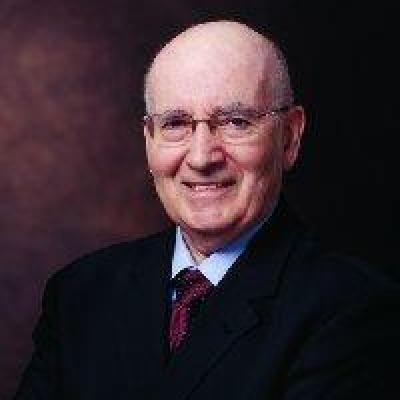
My primary early interest was in marketing and my aim was to improve its theories, methods and tools. Early on I pressed companies to adopt a consumer orientation and to be in the value creation business. I didn't pay much attention to the social responsibilities of business until later. Now I am pressing companies to address the triple bottom line: people, the planet, and profits. I found that companies were too much into short term profit maximization and they needed to invest more in sustainability thinking.
We need to take a close look at the relationship between the economic system of Capitalism and the political system of Democracy. A democracy with high concentrations of private wealth buys votes and interferes with the ability of Capitalism to perform well. It is no longer one citizen, one vote.
Whenever someone wonders how I could have written 57 books, I remind them that Isaac Asimov wrote 500 books.
I admire firms that have achieved a real differentiation from their competitors. Nike is all about mastering sports. Apple is all about creating technologies to make life easier and better. Audi is is all about introducing new technologies to make automobiles safer and better performing.
The theory of marketing is solid but the practice of marketing leaves much to be desired.
Great insight comes from seeing something as odd and finding out why.
The key solution is to invest in innovation and entrepreneurship within the company. Reducing waste - although probably not eliminating it - and do so at all levels of government would probably generate the capital needed. Alas, that will probably not happen because it makes too much sense.
Today's smart marketers don't sell products; they sell benefit packages. They don't sell purchase value only; they sell use value.
When managers overdo micromanaging of others, they probably hired the wrong people or failed to give them a clear idea of what each one is to accomplish. I prefer to train employees to be self-managers, just as in an orchestra each performer knows his or her role without being micromanaged.
The Republican Party has consistently opposed Obamacare (as costing more), stimulus spending (as increasing inflation), etc., none of which has happened in spite of seven years of their warnings. Their main problem is that they don't have the character to admit that they are wrong. They don't have enough character to rethink their deeply held assumptions.
There are times when a market such as housing, transportation or the stock or mortgage market keep rising and people with capital want to join in this growth. Soon the markets become overheated, partly because of the abundance of investment money and speculation. This is when the government should raise interest rates and increase the cost of borrowed money. Governments are shy about doing this because it could cause the very recession. Yet this is the best time to do this so that the inevitable recession never reaches the magnitude of the recent Great Recession.
Authentic marketing is not the art of selling what you make but knowing what to make. It is the art of identifying and understanding customer needs and creating solutions that deliver satisfaction to the customers, profits to the producers and benefits for the stakeholders.
We need to put limits on how much an individual, group or business can spend on influencing an individual legislator or a whole set of legislators. Look at the vast sums that the NRA spends on getting all legislators to be soft on gun control. Legislators find it hard to refuse the NRA's largess when they need contributions to their political campaign wherever they can get them.
It is no longer enough to satisfy your customers. You must delight them.
Every company that manufactures something is causing some damage either to the soil or water or air. Most companies treat these as externalities. But the growing movement of sustainability calls for companies to internalize these costs. Once companies do this, they will have a strong incentive to reduce their carbon footprint.
We should tax every company's carbon footprint and the carbon footprint of every building and home, to incentivize people to reduce their carbon footprint.
Republicans talk loudly about freedom and yet are against a women deciding what's best for her own body and are against the freedom of two people of the same sex to marry.
The sales department isn’t the whole company, but the whole company better be the sales department.
It is more important to do what is strategically right than what is immediately profitable.
Good companies will meet needs; great companies will create markets.
Every business is a service business. Does your service put a smile on the customer's face?
Companies pay too much attention to the cost of doing something. They should worry more about the cost of not doing it.
Marketing is the set of human activities directed at facilitating and consummating exchanges.
Thomas Edison had great visions (for lights, music players, movies, etc.) but he knew they didn't count until he could make them work. His statement that creativity is 99% perspiration makes that point. Consider how much time he spent trying to make a synthetic rubber material for tires and never stopped trying but he never succeeded.
The CEO announces that the purpose of the firm is to improve the lives of the customers and the lives of the firm's stakeholders and the quality of the planet. The company will give fair compensation to all the stakeholders and the CEO will not earn more than 20 times the median income of his employees. He will want his employees to rate him, just as he also has to rate them.
Marketing is a race without a finishing line
Marketing is not the art of finding clever ways to dispose of what you make. It is the art of creating genuine customer value.
The best advertising is done by satisfied customers.
I found marketing to be highly descriptive and prescriptive, without much of a foundation in deep research. I brought in economics, organization theory, mathematics, and social psychology in my first edition of Marketing Management in 1967. Today Marketing Management is in its 15th edition and remains the world's leading textbook on marketing in MBA programs. Subsequently, I wrote two more textbooks, Principles of Marketing and Marketing: an Introduction.
I admire companies that have a purpose, passion, and performance. I am a fan of Unilever under its CEO Paul Polman, not only for the company's insights into women and men when they buy beauty products or skin products (the DOVE woman, the AXE man), but also as a company seeking to achieve both growth and practicing social responsibility.
Good customers are an asset which, when wellmanaged and served, will return a handsome lifetime income stream for the company.
My parents, and their interest in making the world a better place for more people inspired me.
The most important thing is to forecast where customers are moving, and be in front of them.
Watch the product life cycle; but more important, watch the market life cycle.
A great leader is one who surrounds himself with great people who then, collectively, innovate and implement with success. If he tries to do it all by himself, he is an egotist and likely to fail.
Curiosity is the starting point for great science.
CEOs need to produce continuous growth in sales and profits. Yet they must also invest in sustainability and social responsibility, which then leave them less money for financing their growth.
Marketing takes a day to learn. Unfortunately, it takes a lifetime to master.
The future isn’t ahead of us. It has already happened.
When it comes to efficiency and effectiveness, I would always start with effectiveness. I am interested in achieving a certain outcome. Only secondarily do I worry about achieving it as efficiently as possible.
Poor firms ignore their competitors; average firms copy their competitors; winning firms lead their competitors.
The key to branding, especially for smaller firms, is to focus on a limited number of issue areas and develop superb expertise in those areas.
People who lack material wealth, who are poor, won't be very happy. They will be obsessed with meeting their bills at pay day. And people who have an abundance of material goods are often not happy.
People are more comfortable with the familiar. It takes selling a big dream that comes with excellent income possibility to get someone to leave his or her comfort zone.
Robots equipped with software can be designed to do repetitive jobs. All that you need in a factory is a set of dials, an expert, and a dog to keep the expert awake. We will be moving shortly to the next stage to robots with artificial intelligence who can "think."
Your company does not belong inmarkets where it cannot be the best.
Strategy is indeed about choosing what not to do as well as what to do. A business unit needs to decide what need it aims to satisfy in what group of people and with what value proposition that distinguishes the business from its competitors.
I believe in the triple bottom line: people, planet, and profits. I would make sure to hire the best people and pay them more than my competitors. I would encourage their participation in decision making and hope that they can feel free to disagree with me.
Authentic marketing is not the art of selling what you make but knowing what to make!
The successful salesperson cares first for the customer, second for the products.
Marketing is becoming a battle based on information than on sales power.
A country's middle class is its bedrock.
Turbulence is a condition that we all experience during a flight when the plane is bouncing around by competing air currents. By analogy, the economy may bounce around a lot because of competing currents of public moods and investments. One week everyone might be optimistic and then suddenly something happens to turn everyone into pessimists. Investment dries up and investors become risk averse. A sudden piece of good news then turns around the public mood.
In America, we are not lacking solutions. We are lacking a two-party system that is willing to agree on solutions. Part of this is due to rigid ideological positioning that substitutes for really thinking about the facts and solutions.
Too much of the income gains go to too few people, even though all of the stakeholders worked together to make their companies successful. By failing to put enough income into more hands, the GDP grows slower and consumers manage to meet their needs by incurring high levels of debt.
Today you have to run faster to stay in place.
I have always favored Capitalism as the best economic system and Democracy as the best political system. They both have the most potential for improving the lives of people. However, both systems need to be reexamined and refreshed so that, in fact, they do serve the majority of people.
Whenever someone wonders how I could have written 57 books, I remind them that Isaac Asimov wrote 500 books. I like Asimov's view that great insight comes from seeing something as odd and finding out why. Curiosity is the starting point for great science.
Every company should work hard to obsolete its own product line - before its competitors do.
Our infrastructure of bridges, roads and ports has been given a D-level rating by many civil engineer societies. The government should shift some money from the Defense budget and hire companies to fix our infrastructure. As for non-construction workers, we need to do job retraining in those growing areas where more skilled workers will be needed.
Many great ideas need refreshment and deeper analysis. "Freedom," for example, is a great idea but it has become a cliché.
Integrated marketing communications is a way of looking at the whole marketing process from the view point of the customer.
The most common conception of Capitalism is that it is an economic system consisting of privately owned businesses and large corporations that are run for profit. The profit comes from running the business efficiently and keeping the products and services up to date and competitively priced.
Don’t buy market share. Figure out how to earn it.
The size of the U.S. middle class has been shrinking. Wages have been stagnant. We don't have those factory jobs that paid a living wage and enabled a family to have a home where the wife did not have to work. But we sent our factories abroad and there is no likelihood of getting them back. Equally worrisome is that some managerial jobs and professional jobs (such as lawyers) which support middle class life are threatened by automation.
Leaders such as Alexander the Great, Napoleon, Franklin D. Roosevelt and others promulgated a vision and a moving story of how their people could achieve a great purpose.
In fact, Capitalism has a vested interest in creating new wants and making people unhappy until they acquire the next good.
Competitive advantage is a companys ability to perform in one or more ways that competitors cannot or will not match.
Requiring the payment of higher wages will lead to a loss of some jobs and a raising of prices which drives companies to search for automation to reduce costs. On the other hand, those receiving higher wages will spend more (the marginal propensity to consume is close to 1 for low income earners) and this will increase demand for additional goods and services. Henry Ford had the clearest vision of why companies can actually benefit by paying higher wages.
The art of marketing is the art of brand building. If you arenot a brand, you are a commodity. Then price is everything and the low-cost producer is the only winner.
There is much work to do to protect forests from over-timbering and oceans and lakes from over-fishing. We need to encourage and reward companies that create jobs to reduce the carbon footprints of offices and buildings and homes.
In working on any one problem, such as higher minimum wages, so many other issues come into play, such as some businesses possibly closing down, thus creating fewer jobs and more unemployment and incentivizing companies to import more goods from abroad, which leads to even less employment at home, and so on.
Our legislators have become a set of "whores" open to the highest bidders. The problem is that if we try to limit lobbying, we are in effect limiting free speech.
One of the major causes of poverty is a lack of family planning. Governments and nonprofit organizations need to encourage poor people to use birth control so that they don't have unexpected babies, which will only make poorer families poorer.
Most of the productivity gains appear to go to the top 1 percent. Most people don't have enough income and as a result, they borrow additional money by using their credit card and they fall into high debt. The result of the growing income gap is a slower growing GDP (too few people with money to spend) and a rising tide of indebtedness.
I would favor three policies: raising the minimum wage to $12, closing the tax loophole where persons only pay a 15% income tax on long term capital gains (tax it at the full tax rate), and institute a progressive tax moving the highest tax rate from 39.6% to 45%. I would favor implementing these three policies in that order, starting with raising the minimum wage, but not stopping there.
There is only one winning strategy. It is to carefully define the target market and direct a superior offering to that target market.
Over the past 60 years, marketing has moved from being product-centric (Marketing 1.0) to being consumer-centric (Marketing 2.0). Today we see marketing as transforming once again in response to the new dynamics in the environment. We see companies expanding their focus from products to consumers to humankind issues. Marketing 3.0 is the stage when companies shift from consumer-centricity to human-centricity and where profitability is balanced with corporate responsibility.
The internet will create the winnerand bury the laggards.
There is no such thing as a commodity. It is simply a product waiting to be differentiated.
A person without an Apple watch is perfectly content with his present watch but when he sees his friends buying the watch, he will hanker for an Apple watch. The endless cycle of wanting, getting, and wanting again is part of the plot of Capitalism. It is the way Capitalism creates jobs. The only antidote is Buddhism that holds that people might be happier by renouncing desire rather than by striving to satisfy desire. But then how can the economy create enough jobs in a Buddhist society of "less is more."
The best way to hold customers is to constantly figure out how to give them more for less.