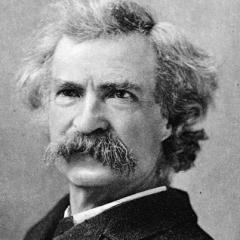
Marcus buckingham quotes
Explore a curated collection of Marcus buckingham's most famous quotes. Dive into timeless reflections that offer deep insights into life, love, and the human experience through his profound words.

Every company wants to know how to find and keep highly talented women in the workplace.
There's something unique and different that makes a leader, and it's not about creativity or courage or integrity.... A leader's job is to rally people toward a better future.
Clarity is the preoccupation of the effective leader. If you do nothing else as a leader, be clear.
Great managers know they don't have 10 salespeople working for them. They know they have 10 individuals working for them . A great manager is brilliant at spotting the unique differences that separate each person and then capitalizing on them.
We live with them every day, and they come so easily to us that they cease to be precious.
The best way to find out whether you're on the right path? Stop looking at the path.
No idea will work if people don't trust your intentions toward them.
If you want to be clear, act.
As with all catalysts, the manager's function is to speed up the reaction between two substances, thus creating the desired end product. Specifically, the manager creates performance in each employee by speeding up the reaction between the employee's talent and the company's goals, and between the employee's talent and the customer's needs.
Remember the Golden Rule? "Treat people as you would like to be treated." The best managers break the Golden Rule every day. They would say don't treat people as you would like to be treated. This presupposes that everyone breathes the same psychological oxygen as you. For example, if you are competitive, everyone must be similarly competitive. If you like to be praised in public, everyone else must, too. Everyone must share your hatred of micromanagement.
You grow most in your areas of greatest strength. You will improve the most, be the most creative, be the most inquisitive, and bounce back the fastest in those areas where you have already shown some natural advantage over everyone else your strengths. This doesn't mean you should ignore your weaknesses. It just means you'll grow most where you're already strong.
The secret to living a strong life is right in front of you, calling to you every day. It can be found in your emotional reaction to specific moments in your life.
It's a special person - and personality - who can lead a start-up to soaring success and sustain that success for the long term. Apple co-founder Steve Jobs and Facebook's Mark Zuckerberg are star examples.
If you want execution, hail only success. If you want creativity, hail risk, and remain neutral about success.
Focusing on strengths is the surest way to greater job satisfaction, team performance and organizational excellence.
Too many of the organizations I have observed resemble a farm in Kansas. They have lots of fences and silos as well as a storm cellar.
Managers are, and should be, totally responsible for recognizing individual strengths (both natural talents and skills), getting those strengths in proper alignment (i.e. in the right "seats"), and then leveraging them.
CEOs the world over are fond of pointing to their workforce and saying "Our people are our greatest asset." And yet today, only two out of ten people think their assets are being well used at work.
If the manager really is the problem, try to get reassigned elsewhere in the organization or start looking for one in which you can play to your strengths.
Many of us feel stress and get overwhelmed not because we're taking on too much, but because we're taking on too little of what really strengthens us.
You should know that what wakes me up at night, what gets me running fast in the morning, and, frankly, what prompts me to lose any semblance of my habitual reserve is the conviction that work doesn't have to be this grim. We can do better.
What do we know to be important but are unable to measure?
The time you spend with your best (employees) is, quite simply, your most productive time.
Obviously, you have to know what you need now and what you will soon need, then hire or promote from within to meet those needs.
The corporate world is appallingly bad at capitalizing on the strengths of its people.
There is no shortage of mechanisms by which to measure almost anything.
The opposite of a leader isn't a follower. The opposite of a leader is a pessimist.
We all want the chance to express the very best of ourselves and to be challenged to keep reaching for more. Our time at work affords us this chance - not the only chance, to be sure, but, given that we're there forty or fifty hours a week, it's one of the best.
In most cases, no matter what it is, if you measure it and reward it, people will try to excel at it
The difference between a pebble and a mountain lies in whom you ask to move it.
People leave managers, not companies
Leaders are fascinated by future. You are a leader if and only if, you are restless for change, impatient for progress and deeply dissatisfied with status quo. Because in your head, you can see a better future. The friction between 'what is' and 'what could be' burns you, stirs you up, propels you. This is leadership.
Gen Y is really quite distinct from Gen X; it's really self-involved and very narcissistic - their cameras are filled with pictures of themselves; Facebook, it's about me. It's a generation that's been pampered by their parents and their schools, given prizes for just taking part.
We dream of having a clean house - but who dreams of actually doing the cleaning? We don't have to dream about doing the work, because doing the work is always within our grasp; the dream, in this sense, is to attain the goal without the work.
The talented employee may join a company because of its charismatic leaders, its generous benefits, and its world-class training programs, but how long that employee stays and how productive he is while he is there is determined by his relationship with his immediate supervisor.
Every time you make a rule you take away a choice, and choice, with all of its illuminating repercussions, is the fuel for learning.
If we have to know without a doubt that the choices we are making are the perfect ones, we risk never making any choices at all.
Women have lives that become increasingly empty. They're doing more and feeling less.
We need to say goodbye to the traditional methodologies of corporate universities.
The fact remains that we have an obligation to discover what we really, really, really want to do (which is probably what we do best) and then do it even better... much better.
There has to be a way to redirect employee's driving ambition and to channel it more productively. There is. Create heroes in every role. Make every role, performed at excellence, a respected profession.
People quit managers, not jobs.
Clarity is the answer to anxiety. Effective leaders are clear.
My point is, people really don't change very much.
Strengths are not activities you're good at, they're activities that strengthen you. A strength is an activity that before you're doing it you look forward to doing it; while you're doing it, time goes by quickly and you can concentrate; after you've done it, it seems to fulfill a need of yours.
Talent is the multiplier. The more energy and attention you invest in it, the greater the yield. The time you spend with your best is, quite simply, your most productive time.
As a general rule, people tend to do best what they enjoy doing most.
You can find energizing moments in each aspect of your life, but to do so you must learn how to catch them, hold on to them, to feel the pull of their weight and allow yourself to follow where they lead.
Americans just love convening. They are a convention-happy country and they love to get together to talk.
There are "four keys" to becoming an excellent manager: finding the right fit for employees, focusing on strengths of employees, defining the right results, and hiring for talent - not just knowledge and skills.
When it comes to exploring your creative side, it's very easy to think of all the reasons you can't do it-you don't have the time, you don't have the money, etc.-but if you are truly passionate about expressing yourself, you can find a way. When you feel as though you can't do something, the simple antidote is action: Begin doing it. Start the process, even if it's just a simple step, and don't stop at the beginning. Take the next step and the next until what you've dreamed about begins to become reality.
A strength is what you do that makes you feel strengthened.
Getting after this terrible, avoidable waste of human potentiality is what gets me out of bed every morning.
It remains true that great managers recognize individualities and focus on developing strengths rather than weaknesses. Great leaders, in sharp contrast, recognize what is (or could be) shared in common - a vision, a dream, a mission, whatever - and inspire others to join them in the given enterprise.
You will excel only by maximizing your strengths, never by fixing your weaknesses.
"Freedom, individualism, authenticity and being yourself so long as you don't hurt another's physical person or property: Sustained success comes only when you take what's unique about you and figure out how to make it useful!"
Teach your children how to identify their own strengths and challenge them to contribute these strengths to others.
People should be hired "as is" and their managers then help them to develop their individual strengths while completing tasks for which they have the greatest aptitude and in which they have the greatest interest.
Innovation and best practices can be sown throughout an organization - but only when they fall on fertile ground.
You shouldn't take pride in your natural talents any more than you should take pride in your sex, your race or color of your hair
The best strategy for building a competitive organization is to help individuals become more of who they are.
True individuality can be lonely.
Spend the most time with your best people. ... Talent is the multiplier. THe more energy and attention you invest in it, the greater the yield. The time you spend with your best is, quite simply, your most productive time. ... Persistence directed primarily toward your non-talents is self-destructive. ... You will reprimand yourself, berate yourself, and put yourself through all manner of contortions in an attempt to achieve the impossible.
Sustained success means making the greatest possible impact over the longest period of time
Everyone can probably do at least one thing better than ten thousand other people.
In a war, no matter the outcome of a certain skirmish or battle, the winner is the party whose attitudes, behaviors and preoccupations come to dominate the postwar landscape. By this measure, the outcome of the gender wars, if wars they were, is clear: women won.
Companies don't have one culture. They have as many as they have supervisors or managers. You want to build a strong culture? Hold every manager accountable for the culture that he or she builds.
The true genius of a great manager is his or her ability to individualize. A great manager is one who understands how to trip each person's trigger.
American culture is CEO obsessed. We celebrate the hard-charging heroes and mythologize the iconoclastic visionaries. Those people are important.
You will learn and grow the least in your areas of weakness.
Most of my work has been in corporations, studying how you build an organization that helps people to identify and work to their strengths.
Remember, what you focus on expands; results follow focus.
I need to reach out to people who work for small to mid-sized companies, and help them identify and apply their strengths at work.
I do still get extremely nervous before speeches. My biggest fear is that I'll be standing there in front of hundreds of people and be incapable of talking. I'm afraid that I'll make a complete fool of myself and be unable to go on.
You cannot learn very much about excellence from studying failure.
Most of the time, our limitations are self-imposed.
Always work hard. Intensity clarifies. It creates not only momentum, but also the pressure you need to feel either friction, or fulfillment.
Life's tricky for women because they have to make more choices than men. And yes, choice is good, but boy, you better be an expert choice-maker.
Too many companies waste time trying to eliminate their employees' weaknesses when, in fact, they should concentrate on developing their strengths.
I think a good business book has one coherent idea that is richly played out.
Google and Facebook, each in their own way, have revolutionized the delivery of advertising based on search and social networking, creating a sort of anti-Spam: targeted, relevant ads that a consumer might actually welcome rather than spurn.
Forcing your employees to follow required steps only prevents customer dissatisfaction. If your goal is truly to satisfy, to create advocates, then the step-by-step approach alone cannot get you there. Instead, you must select employees who have the talent to listen and to teach, and then you must focus them toward simple emotional outcomes like partnership and advice....Identify a person's strenths. Define outcomes that play to those strengths. Find a way to count, rate or rank those outcomes. And then let the person run.
All the great organizations have great managers at all levels who recognize where their culture is getting stronger and where it is getting weaker. There are always reasons why.
We're all filled with naturally recurring patterns that make us unique - they're called talents. And our charge is to bloody well use them.
To get the best coaching outcomes, always have your 1-on-1's on your employee's turf not yours. In your office the truth hides.
The Four Keys of Great Managers: When selecting someone, they select for talent ... not simply experience, intelligence or determination. When setting expectations, they define the right outcomes ... not the right steps. When motivating someone, they focus on strengths ... not on weaknesses. and When developing someone, they help him find the right fit ... not simply the next rung on the ladder.
The first step is to recognize what you need to know and why you need to know it.
Discover what you don't like doing and stop doing it.
Don't waste time trying to put in what was left out. Try to draw out what was left in.
Authenticity is your most precious commodity as a leader.
Emphasize your strengths on your resume, in your cover letters and in your interviews. It may sound obvious, but you'd be surprised how many people simply list everything they've ever done. Convey your passion and link your strengths to measurable results. Employers and interviewers love concrete data.
Your strongest life is built through a continuous practice of designing moment by moment.
CEOs hate variance. It's the enemy. Variance in customer service is bad. Variance in quality is bad. CEOs love processes that are standardized, routinized, predictable. Stamping out variance makes a complex job a bit less complex.
You won't find a CEO who doesn't talk about a 'powerful culture' as a source of competitive advantage. At the same time, you'd be hard-pressed to find a CEO who has much of a clue about the strength of that culture.
It's odd that I'm a big name in America and not known in Britain.
In the minds of great managers, consistent poor performance is not primarily a matter of weakness, stupidity, disobedience, or disrespect. It is a matter of miscasting.
Define excellence vividly, quantitatively. Paint a picture for your most talented employees of what excellence looks like. Keep everyone pushing and pushing toward the right-hand edge of the bell curve.
A note of caution: We can never achieve goals that envy sets for us. Looking at your friends and wishing you had what they had is a waste of precious energy. Because we are all unique, what makes another happy may do the opposite for you. That's why advice is nice but often disappointing when heeded.
Convey your passion and link your strengths to measurable results. Employers and interviewers love concrete data.
When you feel as though you can't do something, the simple antidote is action: Begin doing it. Start the process, even if it's just a simple step, and don't stop at the beginning.
Great leaders rally people to a better future.
Born of the impossibly varied options we have to amuse ourselves, cutting-edge companies are finding innovative ways to tailor our entertainment choices to who we are, relieving us of the burden of finding the diamond in the rough of 500 TV channels or thousands of movies and music albums released every year.
Passion isn't something that lives way up in the sky, in abstract dreams and hopes. It lives at ground level, in the specific details of what you're actually doing every day.