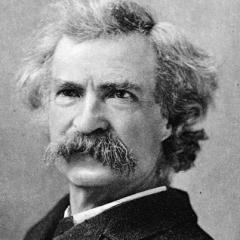
Francis collins quotes
Explore a curated collection of Francis collins's most famous quotes. Dive into timeless reflections that offer deep insights into life, love, and the human experience through his profound words.

What faith has not been used by demagogues as a club over somebody's head?
I believe God did intend, in giving us intelligence, to give us the opportunity to investigate and appreciate the wonders of His creation. He is not threatened by our scientific adventures.
Science's tools will never prove or disprove God's existence.
As a scientist, you're not supposed to make decisions without the data.
The word 'living' has so many connotations that I'm almost reluctant to try to define it scientifically because it sounds as if I'm then downgrading all the other significances of that word.
I trained initially as a physical chemist, and then, after becoming interested in biology, I went to medical school and learned how to be a physician. So, I'm a physician scientist.
It's interesting when you read the life of Christ how much of his time he spent healing the sick. There must have been a reason for that - he was modelling for us what it is we are intended to do by following his path.
When a drug comes out [that's broadly prescribed] there are going to start to be a lot of people on it [in a million person cohort] and you might get therefore an early signal of something unexpected that hadn't come through in the clinical trials. And I'm sure [drug companies] would love it if, in fact, FDA, recognizing that, would say, OK, maybe you don't have to do your trial with 30,000 people because we're going to find out shortly after registration because we'll have a lot of people taking the drug and we'll be able to see what happened using PMI.
When you make a breakthrough it is a moment of scientific exhilaration because you have been on this search and seem to have found it. But it is also a moment where I at least feel closeness to the creator in the sense of having now perceived something that no human knew before but God knew all along.
Successful weight management really means a permanent change in lifestyle - and success in this arena provides that person with a great opportunity to model that behavior for friends and family.
Evolution, as a mechanism, can be and must be true. But that says nothing about the nature of its author. For those who believe in God, there are reasons now to be more in awe, not less.
The airman must possess absolutely untroubled nerves.
A lot of science doesn't require big "ns" but if you're trying to understand something about human health and you're looking at interventions that are not going to be either killing you or making you live forever - they're going to have some tweaking on the outcome - you need big numbers or you don't have enough power.
The best diet is the one that can be sustained over the long term, combined with other healthful lifestyle behaviors.
Nobody gets argued all the way into becoming a believer on the sheer basis of logic and reason. That requires a leap of faith.
Sometimes you develop a passion for something because of some personal experience.
By investigating God's majestic and awesome creation, science can actually be a means of worship.
The problem [with genetic research] is, we're just starting down this path, feeling our way in the dark. We have a small lantern in the form of a gene, but the lantern doesn't penetrate more than a couple of hundred feet. We don't know whether we're going to encounter chasms, rock walls or mountain ranges along the way. We don't even know how long the path is.
Scientists must venture outside their comfort zones to show the public how cool - and how important - their work really is.
Science is... a powerful way, indeed - to study the natural world. Science is not particularly effective... in making commentary about the supernatural world. Both worlds, for me, are quite real and quite important. They are investigated in different ways. They coexist. They illuminate each other.
[Locating, from scratch, the gene related to a disease is like] trying to find a burned-out light bulb in a house located somewhere between the East and West coasts without knowing the state, much less the town or street the house is on.
I think history would say that medical research has, throughout many changes of parties, remained as one of the shining lights of bipartisan agreement, that people are concerned about health for themselves, for their families, for their constituents.
People who are in a position of finding out that they're at risk for some illness, whether it's breast cancer, or heart disease, are afraid to get that information - even though it might be useful to them - because of fears that they'll lose their health insurance or their job.
What wakes me up at night is this next generation and what's happening to them. And they're invariably excited about the science that they're doing, but invariably anxious about where there's a future.
The tragedy of young-earth creationism is that it takes a relatively recent and extreme view of Genesis, applies to it an unjustified scientific gloss, and then asks sincere and well-meaning seekers to swallow this whole, despite the massive discordance with decades of scientific evidence from multiple disciplines. Is it any wonder that many sadly turn away from faith concluding that they cannot believe in a God who asks for an abandonment of logic and reason?
I took biology in high school and didn't like it at all. It was focused on memorization. ... I didn't appreciate that biology also had principles and logic ... [rather than dealing with a] messy thing called life. It just wasn't organized, and I wanted to stick with the nice pristine sciences of chemistry and physics, where everything made sense. I wish I had learned sooner that biology could be fun as well.
I'm a pretty informal guy. I ride a Harley.
It's not like you're closing the old doors and that investigators working away in a laboratories on a unique hypothesis are no longer needed. My gosh, they are indeed. But this becomes a real engine for hypothesis generation and even for proof if you have interventions that you can carry out in this kind of large scale and conduct them in a rigorous way. I guess, yeah, it's different. But it's different in a good way.
God gave us free will, and we may choose to exercise it in ways that end up hurting other people.
The human genome will not help us to understand the spiritual side of humankind, or to know who God is or what love is. The well-heeled couple who decide they want to use genetics to have a child that is a gifted musician may end up with a sullen adolescent who smokes marijuana and doesn't talk to them.
What more powerful form of study of mankind could there be than to read our own instruction book?
A lot of people think PMI is the genome project 2.0. No. This is about all the influences on disease - genetics is in there, but the environment is in there as well, health choices, behaviors, all the factors that are important, otherwise we're not doing what we promised we would do - which is in a holistic way look at how people stay healthy or how do they fall ill.
If God is real, and I believe he is, then he is outside of nature. He is, therefore, not limited by the laws of nature in the way that we are.
I think there are people who's lives have been saved because of the study of the genome.
God is an awesome mathematician and physicist.
I think God appreciates that we appreciate his creation.
We are still working with an incomplete compass. The time is right to bring the full power of genomics to bear on the problem of cancer.
When does life begin? When does the soul enter? That's a religious question. Science is not going to be able to help with that.
The blooming of a flower is, in my mind, not a miracle. It's something that we can understand on the basis of molecular biology these days.
Prayer is, for me, not an opportunity to ask God to do stuff for me. Prayer is an opportunity to open myself, to try and understand his will, and oftentimes it's a prayer of thanksgiving, and sometimes it's a prayer of supplication, and sometimes it is just worship.
Addressing the conclusions of The God Delusion point by point with the devastating insight of a molecular biologist turned theologian, Alister McGrath dismantles the argument that science should lead to atheism, and demonstrates instead that Dawkins has abandoned his much-cherished rationality to embrace an embittered manifesto of dogmatic atheist fundamentalism.
God decided to create a species with whom he could have fellowship. Who are we to say that evolution was a dumb way to do it? It was an incredibly elegant way to do it.
[Decoding the human genome sequence] is the most significant undertaking that we have mounted so far in an organized way in all of science. I believe that reading our blueprints, cataloguing our own instruction book, will be judged by history as more significant than even splitting the atom or going to the moon.
Research is so unpredictable. There are periods when nothing works and all your experiments are a disaster and all your hypotheses are wrong.
I had the analysis of a million or so SNPs [single nucleotide polymorphisms] just to see what was there. That's partly because I was writing a book about DNA and personalized medicine and I thought it would be a little bit disingenuous to talk about what could be done without actually having the experiment done on yourself.
We give our kids vaccinations. That's a biological enhancement that's considered not just acceptable but actually admirable.
Yes, evolution by descent from a common ancestor is clearly true. If there was any lingering doubt about the evidence from the fossil record, the study of DNA provides the strongest possible proof of our relatedness to all other living things.
God is most certainly not threatened by science; He made it all possible.
In my own experience as a physician, I have not seen a miraculous healing, and I don't expect to see one.
I'm aware there are certain products that are being advertised - food products - with 'no chemicals whatsoever.' Well, that would be pretty hard to arrange, since everything around us is made up of atoms and molecules - chemicals - including ourselves.
I'm a serious Christian. I take my faith seriously. I try to practice it every day of the week, not just on Sunday.
If God made the natural laws, why could he not violate them when it was a particularly significant moment for him to do so? And if you accept the idea that Christ was also divine, which I do, then his Resurrection is not in itself a great logical leap.
A technological advance of a major sort almost always is overestimated in the short run for its consequences - and underestimated in the long run.
What does it take to get people interested, what does it take to get people engaged, what does it take to get them to give a biospecimen? What does it take to get people like Jim [Ostell] to get interested and engaged, versus someone like my mother?
C.S. Lewis had a big influence on me in this spiritual realm - this sort of sense of longing. A longing for a knowledge that is just outside of our reach, a knowledge for a spiritual connection.
It is certainly true in the United States that there is an uneasiness about certain aspects of science, particularly evolution, because it conflicts, in some people's minds, with their sense of how we all came to be. But you know, if you are a believer in God, it's hard to imagine that God would somehow put this incontrovertible evidence in front of us about our relationship to other living organisms and expect us to disbelieve it. I mean, that doesn't make sense at all.
As our closest relatives, they (chimpanzees) tell us special things about what it means to be a primate and, ultimately, what it means to be a human at the DNA level.
But full sequencing? No. Very hard to interpret. At some point probably we'll all have that opportunity but most of what's there will be stuff that we don't know what to say much about. So it's a great research tool, but for clinical purposes to advise somebody to practice better health maintenance, it's not necessarily gonna be a big one for a while.
Proponents of intelligent design don't accept that some of the very complex nanomachines that we have inside ourselves could have come about solely on the basis of natural selection.
Faith is not the opposite of reason. Faith rests squarely upon reason, but with the added component of revelation.
A virus is not just DNA; a virus is also packaged up, covered over with a series of proteins in a nice, elegant, well-compacted form.
Science's domain is the natural. If you want to understand the natural world and be sure you're not misleading yourself, science is the way to do it.
As you kind of get over the anxiety about [science and evolution], it actually adds to your sense of awe about this amazing universe that we live in, it doesn't subtract from it at all.
I've never heard God speak out loud to me. That's not an experience I have had.
As an atheist evolving to agnosticism, and seeking answers to whether or not belief in God is potentially rational, my life was turned upside down 35 years ago by reading C. S. Lewis's Mere Christianity.
I'm always feeling like I'm lacking wisdom. This reassurance that one can ask God for that and it will happen is certainly reassuring to me.
So much of what we are currently seeing as far as human suffering and misery comes from diseases that should have been preventable but were not.
To get our universe, with all of its potential for complexities or any kind of potential for any kind of life-form, everything has to be precisely defined on this knife edge of improbability. [Y]ou have to see the hands of a creator who set the parameters to be just so because the creator was interested in something a little more complicated than random particles.
[The tests agreed] that I was at higher risk than the average person for Type 2 diabetes, which is what my lab works on. In fact, some of the things they were testing for were variants that we had discovered.
There are good reasons to believe in God, including the existence of mathematical principles and order in creation. They are positive reasons, based on knowledge, rather than default assumptions based on a temporary lack of knowledge.
Are we using science in ways that it wasn't intended to, in which case we should be a little careful, or are we using faith in ways that faith wasn't really designed for? There are certain questions that are better answered by one approach than the other, and if you start mixing that up, then you end up in ... conflict.
The God of the Bible is also the God of the genome. He can be worshipped in the cathedral or in the laboratory. His creation is majestic, awesome, intricate, and beautiful.
There are 15 constants- the gravitational constant, various constants about the strong and weak nuclear force, etc.- that have precise values. If any one of those constants was off by even one part in a million, or in some cases, by one part in a million million, the universe could not have actually come to the point where we see it. Matter would not have been able to coalesce, there would have been no galaxy, stars, planets or people
When I discover something about the human genome, I experience a sense of awe at the mystery of life, and say to myself, 'Wow, only God knew before.' It is a profoundly beautiful and moving sensation, which helps me appreciate God and makes science even more rewarding for me.
One must dig deeply into opposing points of view in order to know whether your own position remains defensible. Iron sharpens iron.
I believe in the literal rising of the body of Christ. It's the cornerstone of my Christian faith.
All illnesses have some heredity contribution. It's been said that genetics loads the gun and environment pulls the trigger.
By committing the scientific method to religious claims you're committing a logical fallacy
I'm enormously interested to see where neuroscience can take us in understanding these complexities of the human brain and how it works, but I do think there may be limits in terms of what science can tell us about what does good and evil mean anyway, and what are those concepts about?
My daughter is a practicing physician so believe me I get a lot of the frustration from her. You get it from patients. For me personally, when I ask my doctor to send me my record, what I get is a scanned PDF of his hard copy! This is not good. It would be hopeless to work with a million people if you had to do this on paper, and one of the reasons this is the right time for this is because of the existence of EHRs.