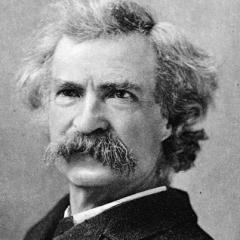
Erwin schrodinger quotes
Explore a curated collection of Erwin schrodinger's most famous quotes. Dive into timeless reflections that offer deep insights into life, love, and the human experience through his profound words.

A careful analysis of the process of observation in atomic physics has shown that the subatomic particles have no meaning as isolated entities, but can only be understood as interconnections between the preparation of an experiment and the subsequent measurement.
Every man's world picture is and always remains a construct of his mind and cannot be proved to have any other existence.
There is no kind of framework within which we can find consciousness in the plural; this is simply something we construct because of the temporal plurality of individuals, but it is a false construction... The only solution to this conflict insofar as any is available to us at all lies in the ancient wisdom of the Upanishad.
Whence come I and whither go I? That is the great unfathomable question. Science has no answer to it.
The scientist only imposes two things, namely truth and sincerity, imposes them upon himself and upon other scientists.
This life of yours which you are living is not merely a piece of this entire existence, but in a certain sense the whole... Thus you can throw yourself flat on the ground, stretched out upon mother earth, with the certain conviction that you are one with her and she with you.
Our mind, by virtue of a certain finite, limited capability, is by no means capable of putting a question to Nature that permits a continuous series of answers. The observations, the individual results of measurements, are the answers of Nature to our discontinuous questioning.
The great revelation of the quantum theory was that features of discreteness were discovered in the Book of Nature, in a context in which anything other than continuity seemed to be absurd according to the views held until then.
Thus you can throw yourself flat on the ground, stretched out upon Mother Earth, with the certain conviction that you are one with her and she with you. You are as firmly established, as invulnerable as she, indeed a thousand times firmer and more invulnerable. As surely as she will engulf you tomorrow, so surely will she bring you forth anew to the new striving and suffering. And not merely "some day." Now, today, every day she is bringing you forth, not once but thousands upon thousands of times, just as every day she engulfs you a thousand times over.
The world is a construct of our sensations, perceptions, memories. It is convenient to regard it as existing objectively on its own. But it certainly does not become manifest by its mere existence.
If a man never contradicts himself, the reason must be that he virtually never says anything at all.
[A living organism] ... feeds upon negative entropy ... Thus the device by which an organism maintains itself stationary at a fairly high level of orderliness (= fairly low level of entropy) really consists in continually sucking orderliness from its environment.
The unphilosophical and philosophical attitudes can be very sharply distinguished (with scarcely any intermediate forms) by the fact that the first accepts everything that happens as regards its general form, and finds occasion for surprise only in that special content by which something that happens here today differs from what happened there yesterday; whereas for the second, it is precisely the common features of all experience, such as characterise everything we encounter, which are the primary and most profound occasion for astonishment.
Consciousness cannot be accounted for in physical terms. For consciousness is absolutely fundamental. It cannot be accounted for in terms of anything else.
The self is not so much linked to its ancestors, it is not so much the product, and merely the product, of all that, but rather, in the strictest sense of the word, the same thing as all that: the strict, direct continuation of it, just as the self aged fifty is the continuation of the self aged forty.
Matter and energy seem granular in structure, and so does “life”, but not so mind.
This life of yours which you are living is not merely a piece of this entire existence, but in a certain sense the whole; only this whole is not so constituted that it can be surveyed in one single glance. This, as we know, is what the Brahmins express in that sacred, mystic formula which is yet really so simple and so clear; tat tvam asi, this is you. Or, again, in such words as "I am in the east and the west, I am above and below, I am this entire world."
What we observe as material bodies and forces are nothing but shapes and variations in the structure of space.
Whence came I, whither go I? Science cannot tell us a word about why music delights us, of why and how an old song can move us to tears. Science is reticent too when it is a question of the great Unity – the One of Parmenides – of which we all somehow form part, to which we belong. The most popular name for it in our time is God – with a capital ‘G’. Whence come I and whither go I? That is the great unfathomable question, the same for every one of us. Science has no answer to it.
Nature has no reverence towards life. Nature treats life as though it were the most valueless thing in the world.... Nature does not act by purposes.
Multiplicity is only apparent, in truth, there is only one mind.
It seems plain and self-evident, yet it needs to be said: the isolated knowledge obtained by a group of specialists in a narrow field has in itself no value whatsoever, but only in its synthesis with all the rest of knowledge and only inasmuch as it really contributes in this synthesis toward answering the demand, "Who are we?"
The task is not to see what has never been seen before, but to think what has never been thought before about what you see everyday.
The organism feeds on negative entropy.
Vedanta teaches that consciousness is singular, all happenings are played out in one universal consciousness and there is no multiplicity of selves.
The sensation of colour cannot be accounted for by the physicist's objective picture of light-waves.
Quantum physics thus reveals a basic oneness of the universe.
Why are atoms so small? ... Many examples have been devised to bring this fact home to an audience, none of them more impressive than the one used by Lord Kelvin: Suppose that you could mark the molecules in a glass of water, then pour the contents of the glass into the ocean and stir the latter thoroughly so as to distribute the marked molecules uniformly throughout the seven seas; if you then took a glass of water anywhere out of the ocean, you would find in it about a hundred of your marked molecules.
The essential feature of statistics is a prudent and systematic ignoring of details.
The present is the only thing that has no end.
The mathematical framework of quantum theory has passed countless successful tests and is now universally accepted as a consistent and accurate description of all atomic phenomena.
The plurality that we perceive is only an appearance; it is not real. Vedantic philosophy... has sought to clarify it by a number of analogies, one of the most attractive being the many-faceted crystal which, while showing hundreds of little pictures of what is in reality a single existent object, does not really multiply that object.
Our perceiving self is nowhere to be found in the world-picture, because it itself is the world-picture.
The multiplicity is only apparent. This is the doctrine of the Upanishads. And not of the Upanishads only. The mystical experience of the union with God regularly leads to this view, unless strong prejudices stand in the way.
No self is of itself alone. It has a long chain of intellectual ancestors. The "I" is chained to ancestry by many factors ... This is not mere allegory, but an eternal memory.
No self is of itself alone.
If you cannot - in the long run - tell everyone what you have been doing, your doing has been worthless.
I know not whence I came, nor whither I go, nor who I am.
If we were bees, ants, or Lacedaemonian| warriors, to whom personal fear does not exist and cowardice is the most shameful thing in the world, warring would go on forever. But luckily we are only men — and cowards.
Bohr’s standpoint, that a space-time description is impossible, I reject a limine. Physics does not consist only of atomic research, science does not consist only of physics, and life does not consist only of science. The aim of atomic research is to fit our empirical knowledge concerning it into our other thinking. All of this other thinking, so far as it concerns the outer world, is active in space and time. If it cannot be fitted into space and time, then it fails in its whole aim and one does not know what purpose it really serves.
The stages of human development are to strive for: (1) Besitz [Possession] (2) Wissen [Knowledge] (3) Können [Ability] (4) Sein [Being].
From all we have learnt about the structure of living matter, we must be prepared to find it working in a manner that cannot be reduced to the ordinary laws of physics. And that not on the ground that there is any 'new force' or what not, directing the behaviour of the single atoms within a living organism, but because the construction is different from anything we have yet tested in the physical laboratory.
Consciousness is never experienced in the plural, only in the singular. Not only has none of us ever experienced more than one consciousness, but there is also no trace of circumstantial evidence of this ever happening anywhere in the world. If I say that there cannot be more than one consciousness in the same mind, this seems a blunt tautology - we are quite unable to imagine the contrary...
Entanglement is not one but rather the characteristic trait of quantum mechanics.
For eternally and always there is only now, one and the same now; the present is the only thing that has no end.
The total number of minds in the universe is one.
Consciousness is a singular of which the plural is unknown. There is only one thing and that which seems to be a plurality is merely a series of different aspects of this one thing, produced by a deception, the Indian maya, as in a gallery of mirrors.
I am very astonished that the scientific picture of the real world around me is deficient. It gives a lot of factual information, puts all our experience in a magnificently consistent order, but it is ghastly silent about all and sundry that is really near to our heart, that really matters to us. It cannot tell us a word about red and blue, bitter and sweet, physical pain and physical delight; it knows nothing of beautiful and ugly, good or bad, God and eternity.
The world is given to me only once, not one existing and one perceived. Subject and object are only one.
We must not wait for things to come, believing that they are decided by irrescindable destiny. If we want it, we must do something about it.
I don't like it, and I'm sorry I ever had anything to do with it.
We do not belong to this material world that science constructs for us. We are not in it; we are outside. We are only spectators. The reason why we believe that we are in it, that we belong to the picture, is that our bodies are in the picture. Our bodies belong to it. Not only my own body, but those of my friends, also of my dog and cat and horse, and of all the other people and animals. And this is my only means of communicating with them.
If we are going t stick to this damned quantum-jumping, then I regret that I ever had anything to do with quantum theory.
If all this damned quantum jumping were really here to stay, I should be sorry, I should be sorry I ever got involved with quantum theory.
Science cannot tell us a word about why music delights us, of why and how an old song can move us to tears.
Consciousness is a singular for which there is no plural.
In this communication I wish first to show in the simplest case of the hydrogen atom (nonrelativistic and undistorted) that the usual rates for quantization can be replaced by another requirement, in which mention of "whole numbers" no longer occurs. Instead the integers occur in the same natural way as the integers specifying the number of nodes in a vibrating string. The new conception can be generalized, and I believe it touches the deepest meaning of the quantum rules.
In Darwin's theory, you just have to substitute 'mutations' for his 'slight accidental variations' (just as quantum theory substitutes 'quantum jump' for 'continuous transfer of energy'). In all other respects little change was necessary in Darwin's theory...
In an honest search for knowledge, you quite often have to abide by ignorance for an indefinite period.
The material world has only been constructed at the price of taking the self, that is, mind, out of it, removing it; mind is not part of it...
I belong to those theoreticians who know by direct observation what it means to make a measurement. Methinks it were better if there were more of them.
For a solitary animal egoism is a virtue that tends to preserve and improve the species: in any kind of community it becomes a destructive vice.
Thus you can throw yourself flat on the ground, stretched out upon Mother Earth, with certain conviction that you are one with her and she with you...
The world is given to me only once, not one existing and one perceived. Subject and object are only one. The barrier between them cannot be said to have broken down as a result of recent experience in the physical sciences, for this barrier does not exist.
[Plato] was the first to envisage the idea of timeless existence and to emphasize it-against reason-as a reality, more [real] than our actual experience.
An animal that embarks on forming states without greatly restricting egoism will perish.
I insist upon the view that 'all is waves'.
The verbal interpretation, on the other hand, i.e. the metaphysics of quantum physics, is on far less solid ground. In fact, in more than forty years physicists have not been able to provide a clear metaphysical model.