Compose aloud: poetry is a sound. Never explain- your reader is as smart as you. Your reader is not just any reader, but is the rare one with ears in his head.
The times are squalid. They always were. It is a poet's duty to hold the line.
But their determination to banish fools foundered ultimately in the installation of absolute idiots.
Prose exists to convey meaning, and no meaning such as prose conveys can be expressed as well in poetry. That's not poetry's purpose.
To appreciate present conditions, collate them with those of antiquity.
The mystic purchases a moment of exhilaration with a lifetime of confusion; and the confusion is infectious and destructive. It is confusing and destructive to try and explain anything in terms of anything else, poetry in terms of psychology.
I hate Science. It denies a man's responsibility for his own deeds, abolishes the brotherhood that springs from God's fatherhood. It is a hectoring, dictating expertise, which makes the least lovable of the Church Fathers seem liberal by contrast.
Always carry a corkscrew and the wine shall provide itself.
Sooner or later we must absorb Islam if our own culture is not to die of anemia.
Our doom is, to be sifted by the wind, heaped up, smoothed down like silly sands. We are less permanent than thought.
All you can usually say about a poem or a picture is, 'Look at it, listen to it.' Whether you listen to a piece of music or a poem, or look at a picture or a jug or a piece of sculpture, what matters about it is not what it has in common with others of its kind, but what is singularly its own.
Can a moment of madness make up for an age of consent?
Praise the green earth. Chance has appointed her home, workshop, larder, middenpit. Her lousy skin scabbed here and there by cities provides us with name and nation.
Men are fools to invest in real estate.
Name and date split in soft slate a few months obliterate. 166
Author details
Basil Bunting: Biography and Life Work
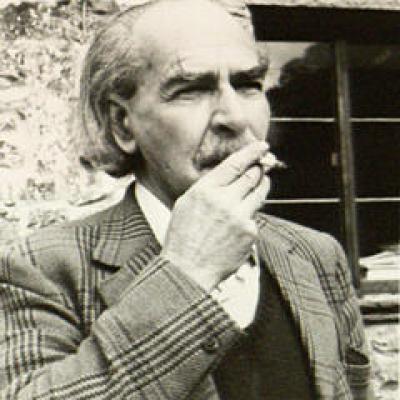
Basil Bunting was a notable Poet. The story of Basil Bunting began on 1 March 1900 in Scotswood-on-Tyne, Northumberland, England. The legacy of Basil Bunting continues today, following their passing on 17 April 1985 in Hexham, Northumberland, England.
Basil Cheesman Bunting (1 March 1900 – 17 April 1985) was a British modernist poet whose reputation was established with the publication of Briggflatts in 1966, generally regarded as one of the major achievements of the modernist tradition in English. He had a lifelong interest in music that led him to emphasise the sonic qualities of poetry, particularly the importance of reading poetry aloud: he was an accomplished reader of his own work.
Legacy and Personal Influence
Personally, Basil Bunting was married to Marian Gray Culver, –1940), Sima Alladadian, –1979).
Philosophical Views and Reflections
In the 1930s, Bunting became interested in medieval Persian literature, studied the language to some degree, and began publishing adaptations of Persian poems by Ferdowsi , Manuchehri , Sa’di , Hafez , and Obayd Zakani ; their use of sound patterning seems to have influenced his own. During the Second World War , Bunting served in British Military Intelligence in Persia . After the war, in 1948, he left government service to become the correspondent for The Times . He married a Kurdish woman, Sima Alladadian, who was thirty years his junior. Because of his marriage to the underage girl, Bunting was fired from the British embassy.
Basil Bunting sat in Northumberland for sculptor Alan Thornhill , with a resulting terracotta (for bronze) in existence. The correspondence file relating to the Bunting portrait bust is held as part of the Thornhill Papers (2006:56) in the archive of the Henry Moore Foundation 's Henry Moore Institute in Leeds and the terracotta remains in the collection of the artist. The 1973 portrait is displayed in the Burton (2014) biography of Bunting.