The 1992 crisis proved that the existing system was unstable. Not moving forward to the euro would have set up Europe for even more disruptive crises.
Why was there so much work-sharing in the 1930s? One reason is that government pushed for it. In his memoirs, President Herbert Hoover estimated that as many as two million workers avoided unemployment as a result of his efforts to promote work-sharing.
For those unfortunate enough to experience it, long-term unemployment - now, as in the 1930s - is a tragedy. And, for society as a whole, there is the danger that the productive capacity of a significant portion of the labour force will be impaired.
The 24% unemployment reached at the depths of the Great Depression was no picnic.
Political union means transferring the prerogatives of national legislatures to the European parliament, which would then decide how to structure Europe's fiscal, banking, and monetary union.
Southern Europe has not done enough to enhance its competitiveness, while northern Europe has not done enough to boost demand. Debt burdens remain crushing, and Europe's economy remains unable to grow.
Across the continent, political divisions are deepening. For all of these reasons, the specter of a euro zone collapse has not been dispatched.
While holding the eurozone together will be costly and difficult and painful for the politicians, breaking it up will be even more costly and more difficult.
As for the single market, the E.U.'s landmark achievement, there is no question that a euro zone breakup would severely disrupt its operation in the short run.
The consequences of a collapse would not be pretty. Whichever country precipitated it - Germany by threatening to abandon the euro, or Greece or Spain by actually doing so - would trigger economic chaos and incur its neighbours' wrath.
More than the Big Mac, Coca Cola, or Levi's 501 jeans, the dollar is surely the United States' signature export.
Author details
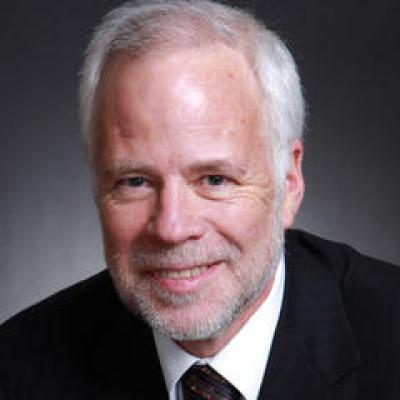
Barry Eichengreen: Biography and Life Work
Barry Eichengreen was a notable American economist and economic historian.
Barry Julian Eichengreen (born 1952) is an American economist and economic historian who is the George C. Pardee and Helen N. Pardee Professor of Economics and Political Science at the University of California, Berkeley , where he has taught since 1987. Eichengreen is a research associate at the National Bureau of Economic Research and a research fellow at the Centre for Economic Policy Research .
Philosophical Views and Reflections
... he proximate cause of the world depression was a structurally flawed and poorly managed international gold standard ... For a variety of reasons, including among others a desire of the Federal Reserve to curb the US stock market boom, monetary policy in several major countries turned contractionary in the late 1920s—a contraction that was transmitted worldwide by the gold standard. What was initially a mild deflationary process began to snowball when the banking and currency crises of 1931 instigated an international "scramble for gold". Sterilization of gold inflows by surplus countries , substitution of gold for foreign exchange reserves , and runs on commercial banks all led to increases in the gold backing of money, and consequently to sharp unintended declines in national money supplies. Monetary contractions in turn were strongly associated with falling prices, output and employment. Effective international cooperation could in principle have permitted a worldwide monetary expansion despite gold standard constraints, but disputes over World War I reparations and war debts, and the insularity and inexperience of the Federal Reserve, among other factors, prevented this outcome. As a result, individual countries were able to escape the deflationary vortex only by unilaterally abandoning the gold standard and re-establishing domestic monetary stability, a process that dragged on in a halting and uncoordinated manner until France and the other Gold Bloc countries finally left gold in 1936.
He has been President of the Economic History Association (2010–2011). In addition to this, he is a non-resident Senior Fellow at the Centre for International Governance Innovation and a regular contributor to Project Syndicate since 2003. He was convener of the Bellagio Group from 2008 to 2020.