
Barnett newman

Aesthetics is to artists as ornithology is to birds.

I hope that my painting has the impact of giving someone, as it did me, the feeling of his own totality, of his own separateness, of his own individuality.

I know that it is impossible to talk about my work. And since it's impossible for me or anybody else to talk about my work, I feel I might as well talk about it.

A painter is a choreographer of space.

Man's first expression, like his first dream, was an aesthetic one. Speech was a poetic outcry rather than a demand for communication. Original man, shouting his consonants, did so in yells of awe and anger at his tragic state, at his own self-awareness and at his own helplessness before the void.

We are in the process of making the world, to a certain extent, in our own image.

Painting, like passion, is a living voice, which, when I hear it, I must let it speak, unfettered.

We have lost contact with man's natural desire for the exalted, for a concern with our relation to absolute emotions.

When painters feel the need to make a shift toward self-discovery, they turn to black and white for a time.

Any art worthy of its name should address 'life', 'man', 'nature', 'death' and 'tragedy'.

The problem of a painting is physical and metaphysical, the same as I think life is physical and metaphysical.

From the very beginning I felt that I would do a series.

Painting, like passion, is a living voice.

Aesthetics is for the artist like ornithology is for the birds.

The impulse of modern art was this desire to destroy beauty.

What is the explanation of the seemingly insane drive of man to be painter and poet if it is not an act of defiance against mans fall and an assertion that he return to the Garden of Eden? For the artists are the first men.

It is our function as artists to make the spectator see the world our way not his way.

Sculpture is what you bump into when you back up to see a painting.

I prefer to leave the paintings to speak for themselves.
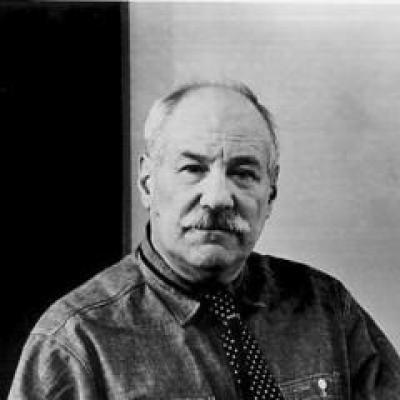
Author details

Barnett Newman: Biography and Life Work

Barnett Newman was a notable American painter. The story of Barnett Newman began on January 29, 1905 in New York City, U.S.. The legacy of Barnett Newman continues today, following their passing on July 4, 1970 in New York City, U.S..

Barnett Newman (January 29, 1905 – July 4, 1970) was an American painter. He has been critically regarded as one of the major figures of abstract expressionism , and one of the foremost color field painters. His paintings explore the sense of place that viewers experience with art and incorporate the simplest forms to emphasize this feeling.

Legacy and Personal Influence

Historically, their work is best remembered for Painting.

Major Contributions

  • Painting
  • sculpture

Philosophical Views and Reflections

Newman's late works, such as the Who's Afraid of Red, Yellow and Blue series, use vibrant, pure colors, often on very large canvases - Anna's Light (1968), named in memory of his mother, who had died in 1965, is his largest work, 28 feet wide by 9 feet tall (8.5 by 2.7 meters). Newman also worked on shaped canvases late in life, with Chartres (1969), for example, being triangular, and returned to sculpture, making a small number of sleek pieces in steel. These later paintings are executed in acrylic paint rather than the oil paint of earlier pieces. Of his sculptures, Broken Obelisk (1963) is the most monumental and best-known, depicting an inverted obelisk whose point balances on the apex of a pyramid.

Ulysses (1952), a blue-and-black striped painting, sold in 1985 for $1,595,000 at Sotheby's to an American collector who was not identified. Consigned by Microsoft co-founder Paul Allen and previously part of Frederick R. Weisman's collection , Newman's 8.5-by-10-foot Onement VI (1953) was sold for a record $43.8 million at Sotheby's New York in 2013; its sale was ensured by an undisclosed third-party guarantee. This was eclipsed on May 13, 2014, when Black Fire 1 sold for $84.2 million.

EQ
Empery Quotes
Inspire · Reflect · Repeat