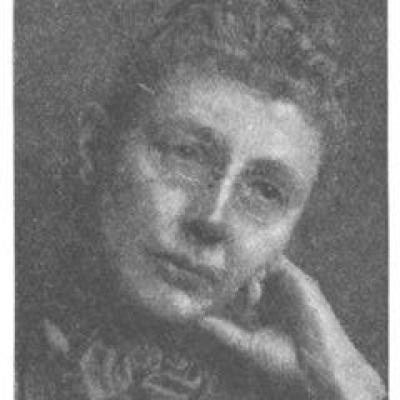
No man pursues what he has at hand. No man recognizes the need of pursuit until that which he desires has escaped him.
Wit is a pleasure-giving thing, largely because it eludes reason; but in the apprehension of an absurdity through the working of the comic spirit there is a foundation of reason, and an impetus to human companionship.
The choice of a topic which will bear analysis and support enthusiasm, is essential to the enjoyment of conversation.
Economics and ethics have little in common.
Bargaining is essential to the life of the world; but nobody has ever claimed that it is an ennobling process.
It is impossible for a lover of cats to banish these alert, gentle, and discriminating friends, who give us just enough of their regard and complaisance to make us hunger for more.
Who that has plodded on to middle age would take back upon his shoulders ten of the vanished years, with their mingled pleasures and pains? Who would return to the youth he is forever pretending to regret?
Humor distorts nothing, and only false gods are laughed off their earthly pedestals.
Necessity knows no Sunday.
The man who never tells an unpalatable truth 'at the wrong time' (the right time has yet to be discovered) is the man whose success in life is fairly well assured.
Everybody is now so busy teaching that nobody has any time to learn.
Science may carry us to Mars, but it will leave the earth peopled as ever by the inept.
to be civilized is to be incapable of giving unnecessary offense, it is to have some quality of consideration for all who cross our path.
The sanguine assurance that men and nations can be legislated into goodness, that pressure from without is equivalent to a moral change within, needs a strong backing of inexperience.
The cure-alls of the present day are infinitely various and infinitely obliging. Applied psychology, autosuggestion, and royal roads to learning or to wealth are urged upon us by kindly, if not altogether disinterested, reformers. Simple and easy systems for the dissolution of discord and strife; simple and easy systems for the development of personality and power. Booklets of counsel on 'How to Get What We Want,' which is impossible; booklets on 'Visualization,' warranted to make us want what we get, which is ignoble.
A puppy is but a dog, plus high spirits, and minus common sense.
I am eighty years old. There seems to be nothing to add to this statement. I have reached the age of undecorated facts - facts that refuse to be softened by sentiment, or confused by nobility of phrase.
Neatness of phrase is so closely akin to wit that it is often accepted as its substitute.
Conversation in its happiest development is a link, equally exquisite and adequate, between mind and mind, a system by which men approach one another with sympathy and enjoyment, a field for the finest amenities of civilization, for the keenest and most intelligent display of social activity. It is also our solace, our inspiration, and our most rational pleasure. It is a duty we owe to one another; it is our common debt to humanity.
The dog is guided by kindly instinct to the man or woman whose heart is open to his advances. The cat often leaves the friend who courts her, to honor, or to harass, the unfortunate mortal who shudders at her unwelcome caresses.
It is unwise to feel too much if we think too little.
There was no escape from the letter-writer who, a hundred or a hundred and twenty-five years ago, captured a coveted correspondent. It would have been as easy to shake off an octopus or a boa-constrictor.
He is your friend, your partner, your defender, your dog. You are his life, his love, his leader. He will be yours, faithful and true, to the last beat of his heart. You owe it to him to be worthy of such devotion. Our dogs will love and admire the meanest of us, and feed our colossal vanity with their uncritical homage.
There is a vast deal of make-believe in the carefully nurtured sentiment for country life, and the barefoot boy, and the mountain girl.
Anyone, however, who has had dealings with dates knows that they are worse than elusive, they are perverse. Events do not happen at the right time, nor in their proper sequence. That sense of harmony with place and season which is so strong in the historian--if he be a readable historian--is lamentably lacking in history, which takes no pains to verify his most convincing statements.
When the contemplative mind is a French mind, it is content, for the most part, to contemplate France. When the contemplative mind is an English mind, it is liable to be seized at any moment by an importunate desire to contemplate Morocco or Labrador.
Why do so many ingenious theorists give fresh reasons every year for the decline of letter writing, and why do they assume, in derision of suffering humanity, that it has declined? They lament the lack of leisure, the lack of sentiment ... They talk of telegrams, and telephones, and postal cards, as if any discovery of science, any device of civilization, could eradicate from the human heart that passion for self-expression which is the impelling force of letters.
The essence of humor is that it should be unexpected, that it should embody an element of surprise, that it should startle us out of that reasonable gravity which, after all, must be our habitual frame of mind.
whereas the dog strives to lessen the distance between himself and man, seeks ever to be intelligent and intelligible, and translates into looks and actions the words he cannot speak, the cat dwells within the circle of her own secret thoughts.
It is not easy to find happiness in ourselves, and it is not possible to find it elsewhere.
Erudition, like a bloodhound, is a charming thing when held firmly in leash, but it is not so attractive when turned loose upon a defenseless and unerudite public.
There is no illusion so permanent as that which enables us to look backward with complacency; there is no mental process so deceptive as the comparing of recollections with realities.
There are few nudities so objectionable as the naked truth.
The perfectly natural thing to do with an unreadable book is to give it away; and the publication, for more than a quarter of a century, of volumes which fulfilled this one purpose and no other is a pleasant proof, if proof were needed, of the business principles which underlay the enlightened activity of publishers.
We owe to one another all the wit and good humour we can command; and nothing so clears our mental vistas as sympathetic and intelligent conversation.
The vanity of man revolts from the serene indifference of the cat.
Humor brings insight and tolerance. Irony brings a deeper and less friendly understanding.
The soul begins to travel when the child begins to think.
[Mary Wortley Montagu] wrote more letters, with fewer punctuation marks, than any Englishwoman of her day; and her nephew, the fourth Baron Rokeby, nearly blinded himself in deciphering the two volumes of undated correspondence which were printed in 1810. Two more followed in 1813, after which the gallant Baron either died at his post or was smitten with despair; for sixty-eight cases of letters lay undisturbed ... 'Les morts n'écrivent point,' said Madame de Maintenon hopefully; but of what benefit is this inactivity, when we still continue to receive their letters?
abroad it is our habit to regard all other travelers in the light of personal and unpardonable grievances. They are intruders into our chosen realms of pleasure, they jar upon our sensibilities, they lessen our meager share of comforts, they are everywhere in our way, they are always an unnecessary feature in the landscape.
Resistance, which is the function of conservatism, is essential to orderly advance.
Wit is as infinite as love, and a deal more lasting in its qualities.
There is always a secret irritation about a laugh in which we cannot join
An appreciation of words is so rare that everybody naturally thinks he possesses it, and this universal sentiment results in the misuse of a material whose beauty enriches the loving student beyond the dreams of avarice.
The gayety of life, like the beauty and the moral worth of life, is a saving grace, which to ignore is folly, and to destroy is crime. There is no more than we need; there is barely enough to go round.
If history in the making be a fluid thing, it swiftly crystallizes.
English civilization rests largely upon tea and cricket, with mighty spurts of enjoyment on Derby Day, and at Newmarket.
A world of vested interests is not a world which welcomes the disruptive force of candor.
There are people who balk at small civilities on account of their manifest insincerity. ... It is better and more logical to accept all the polite phraseology which facilitates intercourse, and contributes to the sweetness of life. If we discarded the formal falsehoods which are the currency of conversation, we should not be one step nearer the vital things of truth.
It is because of our unassailable enthusiasm, our profound reverence for education, that we habitually demand of it the impossible. The teacher is expected to perform a choice and varied series of miracles.
The worst in life, we are told, is compatible with the best in art. So too the worst in life is compatible with the best in humour.
If we could make up our minds to spare our friends all details of ill health, of money losses, of domestic annoyances, of altercations, of committee work, of grievances, provocations, and anxieties, we should sin less against the world's good-humor. It may not be given us to add to the treasury of mirth; but there is considerable merit in not robbing it.
I wonder what especial sanctity attaches itself to fifteen minutes. It is always the maximum and the minimum of time which will enable us to acquire languages, etiquette, personality, oratory ... One gathers that twelve minutes a day would be hopelessly inadequate, and twenty minutes a wasteful and ridiculous excess.
The impulse to travel is one of the hopeful symptoms of life.
The thinkers of the world should by rights be guardians of the world's mirth.
if a man be discreet enough to take to hard drinking in his youth, before his general emptiness is ascertained, his friends invariably credit him with a host of shining qualities which, we are given to understand, lie balked and frustrated by his one unfortunate weakness.
Personally, I do not believe that it is the duty of any man or woman to write a novel. In nine cases out of ten, there would be greater merit in leaving it unwritten.
It is in his pleasure that a man really lives; it is from his leisure that he constructs the true fabric of self.
The English possess too many agreeable traits to permit them to be as much disliked as they think and hope they are.
It has been wisely said that we cannot really love anybody at whom we never laugh.
It takes time and trouble to persuade ourselves that the things we want to do are the things we ought to do.
A kitten is chiefly remarkable for rushing about like mad at nothing whatever and generally stopping before it gets there.
People who cannot recognize a palpable absurdity are very much in the way of civilization.
To be brave in misfortune is to be worthy of manhood; to be wise in misfortune is to conquer fate.
It is not begging but the beggar, who has forfeited favor with the elect.
It is the steady and merciless increase of occupations, the augmented speed at which we are always trying to live, the crowding of each day with more work than it can profitably hold, which has cost us, among other things, the undisturbed enjoyment of friends. Friendship takes time, and we have no time to give it.
I am seventy years old, a gray age weighted with uncompromising biblical allusions. It ought to have a gray outlook, but it hasn't, because a glint of dazzling sunshine is dancing merrily ahead of me.
The pitfall of the feminist is the belief that the interests of men and women can ever be severed; that what brings sufferings to the one can leave the other unscathed.
In those happy days when leisure was held to be no sin, men and women wrote journals whose copiousness both delights and dismays us.
Those persons are happiest in this restless and mutable world who are in love with change, who delight in what is new simply because it differs from what is old; who rejoice in every innovation, and find a strange alert pleasure in all that is, and that has never been before.
Traveling is, and has always been, more popular than the traveler.
Conversation between Adam and Eve must have been difficult at times, because they had nobody to talk about.
We cannot learn to love other tourists,-the laws of nature forbid it,-but, meditating soberly on the impossibility of their loving us, we may reach some common platform of tolerance, some common exchange of recognition and amenity.
Tea had come as a deliverer to a land that called for deliverance; a land of beef and ale, of heavy eating and abundant drunkenness; of gray skies and harsh winds; of strong-nerved, stout-purposed, slow-thinking men and women. Above all, a land of sheltered homes and warm firesides - firesides that were waiting - waiting for the bubbling kettle and the fragrant breath of tea.
The great dividing line between books that are made to be read and books that are made to be bought is not the purely modern thing it seems. We can trace it, if we try, back to the first printing-presses.
What monstrous absurdities and paradoxes have resisted whole batteries of serious arguments, and then crumbled swiftly into dust before the ringing death-knell of a laugh!
Next to the joy of the egotist is the joy of the detractor.
By providing cheap and wholesome reading for the young, we have partly succeeded in driving from the field that which was positively bad; yet nothing is easier than to overdo a reformation, and, through the characteristic indulgence of American parents, children are drugged with a literature whose chief merit is its harmlessness.
It is difficult to admonish Frenchmen. Their habit of mind is unfavorable to preachment.
The tourist may complain of other tourists, but he would be lost without them.
America has invested her religion as well as her morality in sound income-paying securities. She has adopted the unassailable position of a nation blessed because it deserves to be blessed; and her sons, whatever other theologies they may affect or disregard, subscribe unreservedly to this national creed.
Our dogs will love and admire the meanest of us, and feed our colossal vanity with their uncritical homage.
Woman is quick to revere genius, but in her secret soul she seldom loves it.
the tea-hour is the hour of peace ... strife is lost in the hissing of the kettle - a tranquilizing sound, second only to the purring of a cat.
No rural community, no suburban community, can ever possess the distinctive qualities that city dwellers have for centuries given to the world.
Diaries tell their little tales with a directness, a candor, conscious or unconscious, a closeness of outlook, which gratifies our sense of security. Reading them is like gazing through a small clear pane of glass. We may not see far and wide, but we see very distinctly that which comes within our field of vision.
There are few things more wearisome in a fairly fatiguing life than the monotonous repetition of a phrase which catches and holds the public fancy by virtue of its total lack of significance.
People who pin their faith to a catchword never feel the necessity of understanding anything.
The friendships of nations, built on common interests, cannot survive the mutability of those interests.
A man who owns a dog is, in every sense of the words, its master; the term expresses accurately their mutual relations. But it is ridiculous when applied to the limited possession of a cat.
What strange impulse is it which induces otherwise truthful people to say they like music when they do not, and thus expose themselves to hours of boredom?
A real dog, beloved and therefore pampered by his mistress, is a lamentable spectacle. He suffers from fatty degeneration of his moral being.
Believers in political faith-healing enjoy a supreme immunity from doubt.
Humor hardens the heart, at least to the point of sanity.
There is an optimism which nobly anticipates the eventual triumph of great moral laws, and there is an optimism which cheerfully tolerates unworthiness.
There is something frightful in being required to enjoy and appreciate all masterpieces; to read with equal relish Milton, and Dante, and Calderon, and Goethe, and Homer, and Scott, and Voltaire, and Wordsworth, and Cervantes, and Molière, and Swift.
The age of credulity is every age the world has ever known. Men have always turned from the ascertained, which is limited and discouraging, to the dubious, which is unlimited and full of hope for everybody.
There is a secret and wholesome conviction in the heart of every man or woman who has written a book that it should be no easy matter for an intelligent reader to lay down that book unfinished. There is a pardonable impression among reviewers that half an hour in its company is sufficient.
Humor brings insight and tolerance.
To have given pleasure to one human being is a recollection that sweetens life.
Humor, in one form or another, is characteristic of every nation; and reflecting the salient points of social and national life, it illuminates those crowded corners which history leaves obscure.
Books that children read but once are of scant service to them; those that have really helped to warm our imaginations and to train our faculties are the few old friends we know so well that they have become a portion of our thinking selves.
the most comfortable characteristic of the period [1775-1825], and the one which incites our deepest envy, is the universal willingness to accept a good purpose as a substitute for good work.
Cats, even when robust, have scant liking for the boisterous society of children, and are apt to exert their utmost ingenuity to escape it. Nor are they without adult sympathy in their prejudice.
Sleep sweetly in the fields of asphodel, and waken, as of old, to stretch thy languid length, and purr thy soft contentment to the skies.
real letter-writing ... is founded on a need as old and as young as humanity itself, the need that one human being has of another.
What puzzles most of us are the things which have been left in the movies rather than the things which have been taken out.
the audience is the controlling factor in the actor's life. It is practically infallible, since there is no appeal from its verdict. It is a little like a supreme court composed of irresponsible minors.
The delusions of the past seem fond and foolish. The delusions of the present seem subtle and sane.
It is impossible to withhold education from the receptive mind, as it is impossible to force it upon the unreasoning.
Too much rigidity on the part of teachers should be followed by a brisk spirit of insubordination on the part of the taught.
But self-satisfaction, if as buoyant as gas, has an ugly trick of collapsing when full blown, and facts are stony things that refuse to melt away in the sunshine of a smile.
Whatever has "wit enough to keep it sweet" defies corruption and outlasts all time; but the wit must be of that outward and visible order which needs no introduction or demonstration at our hands.
Wit is the salt of conversation, not the food, and few things in the world are more wearying than a sarcastic attitude towards life.
For my part, the good novel of character is the novel I can always pick up; but the good novel of incident is the novel I can never lay down.
Life is so full of miseries, minor and major; they press so close upon us at every step of the way, that it is hardly worthwhile to call one another's attention to their presence.
The necessity of knowing a little about a great many things is the most grievous burden of our day. It deprives us of leisure on the one hand, and of scholarship on the other.
For indeed all that we think so new to-day has been acted over and over again, a shifting comedy, by the women of every century.
A kitten is the most irresistible comedian in the world. Its wide-open eyes gleam with wonder and mirth. It darts madly at nothing at all, and then, as though suddenly checked in the pursuit, prances sideways on its hind legs with ridiculous agility and zeal.
Love is a malady, the common symptoms of which are the same in all patients.
Philadelphians are every whit as mediocre as their neighbors, but they seldom encourage each other in mediocrity by giving it a more agreeable name.
In the stress of modern life, how little room is left for that most comfortable vanity that whispers in our ears that failures are not faults! Now we are taught from infancy that we must rise or fall upon our own merits; that vigilance wins success, and incapacity means ruin
A villain must be a thing of power, handled with delicacy and grace. He must be wicked enough to excite our aversion, strong enough to arouse our fear, human enough to awaken some transient gleam of sympathy. We must triumph in his downfall, yet not barbarously nor with contempt, and the close of his career must be in harmony with all its previous development.
There is nothing in the world so enjoyable as a thorough-going monomania.
The party which is out sees nothing but graft and incapacity in the party which is in; and the party which is in sees nothing but greed and animosity in the party which is out.